

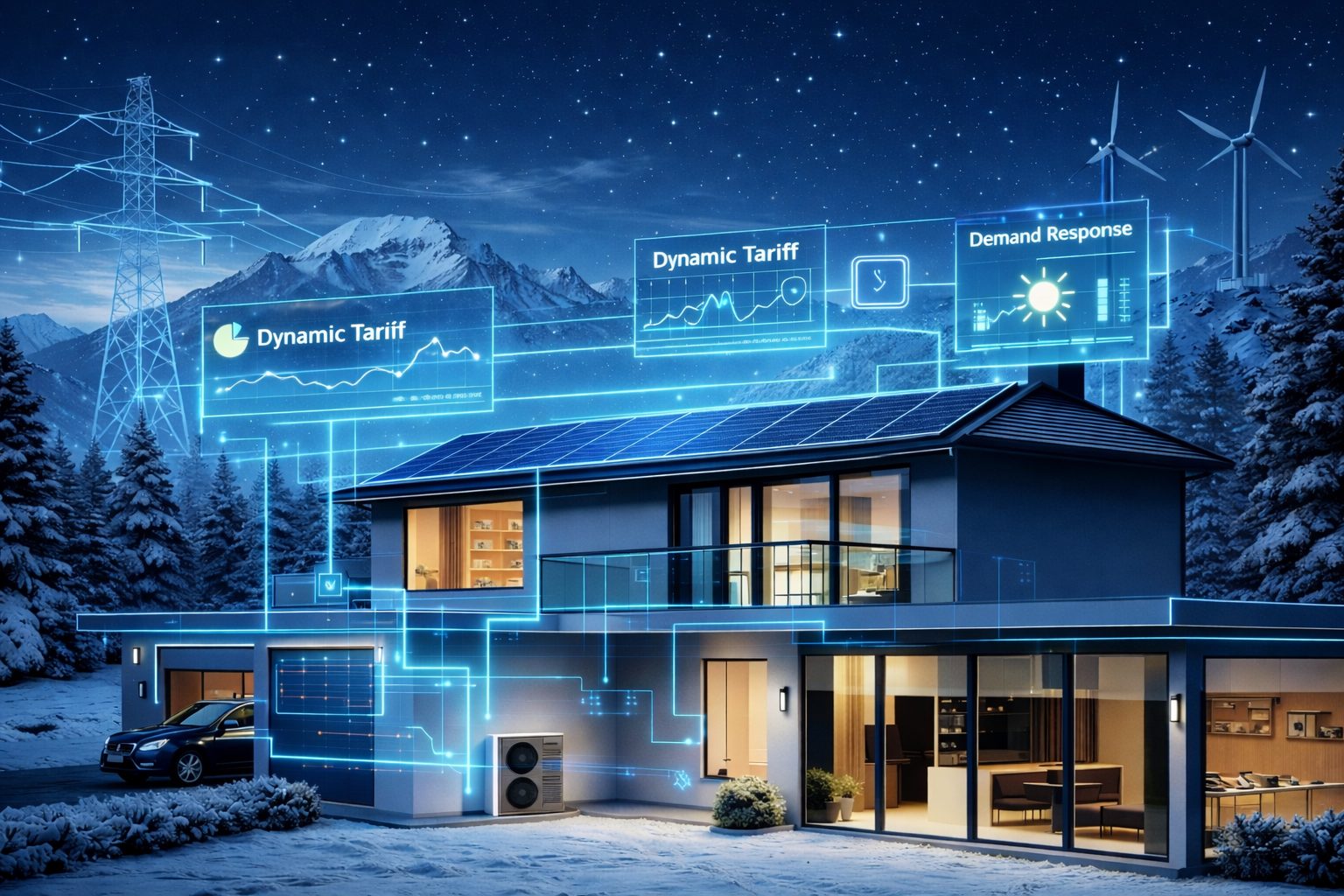
The Shift No One Can Ignore
Europe’s energy system is no longer built around predictable generation.
Wind surges at night. Solar peaks at midday. Grid congestion is no longer an exception—it’s becoming structural.
This is precisely where heat pump demand response integration enters the conversation.
In this context, the question is no longer how efficient a heat pump is.
The real question is:
Can it react?
From Consumption to Participation
Traditional heating systems are passive.
They consume energy when needed—nothing more.
But modern heat pumps, when properly integrated into an energy management system (EMS), operate differently:
- They anticipate price signals
- They shift operation in time
- They store energy thermally instead of electrically
This is the foundation of heat pump demand response integration.
Instead of stressing the grid, the system becomes part of its stabilization logic.
Why Thermal Storage Changes the Equation
Batteries are expensive.
Thermal mass is already there.
Water tanks, buffer systems, and building inertia allow heat pumps to:
- Run when electricity is cheap or abundant
- Pause during peak grid stress
- Maintain comfort without continuous operation
This transforms the heat pump into a flexible energy asset, not just a device.
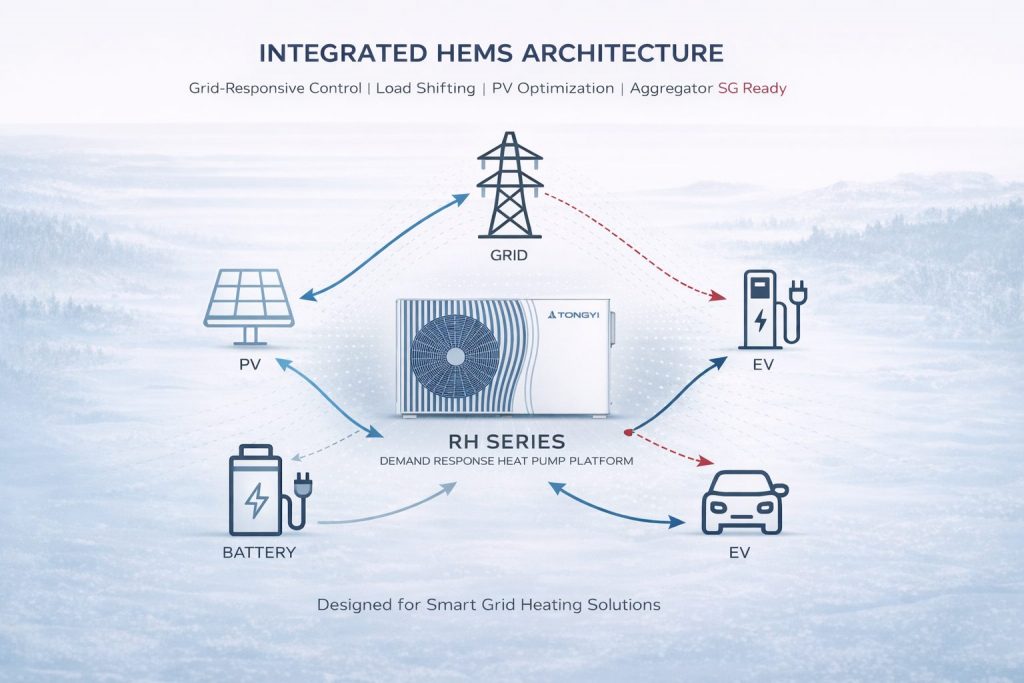
The Role of EMS: Orchestrating Flexibility
At the core of heat pump demand response integration lies the Energy Management System (EMS).
An advanced EMS connects three critical layers:
Energy signals
(dynamic tariffs, grid requests, PV production)
System intelligence
(forecasting, optimization algorithms)
Execution layer
(heat pump modulation, storage control)
This is where theory becomes operation.
Without EMS coordination, heat pump demand response integration remains limited—reactive at best, disconnected at worst.
With it, heating systems evolve into predictive, responsive, and economically optimized assets, capable of aligning comfort with real-time grid conditions.
Aggregators and the Next Revenue Layer
A new actor is entering the ecosystem:
the aggregator.
Aggregators pool thousands of flexible assets—including heat pumps—to:
- Participate in balancing markets
- Provide grid services
- Monetize flexibility
This means the end user is no longer just saving energy.
They can generate value from their heating system.

Design Implications for Modern Heat Pumps
To operate in this environment, systems must be designed differently:
- Compatibility with external control signals
- Stable modulation across variable load conditions
- Integration-ready communication protocols
- Priority logic between comfort and grid signals
In short:
grid-ready by design, not by retrofit.