

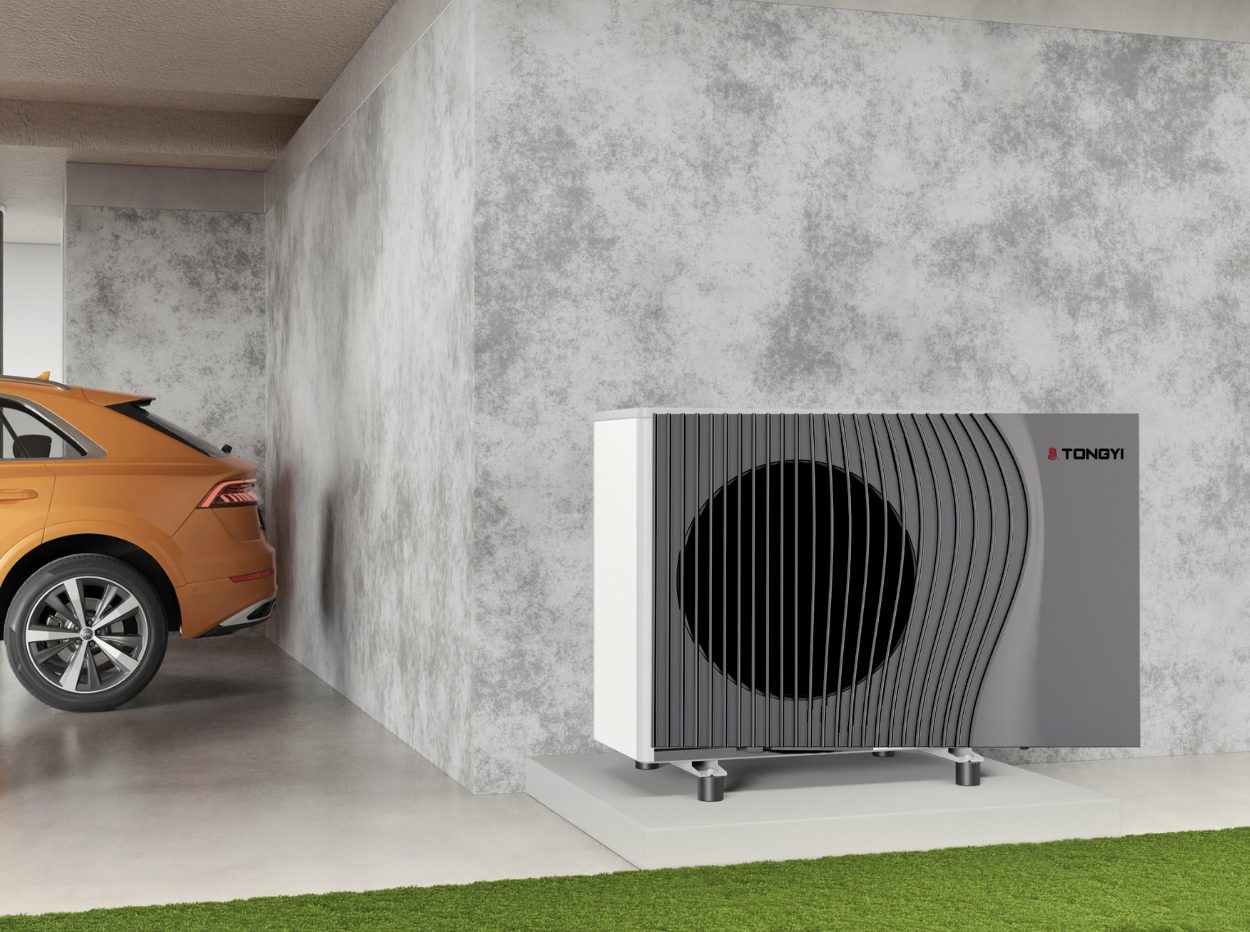
In residential energy systems, the central optimization problem is no longer efficiency alone. It is self-consumption, how much locally generated energy can be used directly instead of exported to the grid. This is where an energy-aware heat pump becomes a system-level asset rather than a simple heating appliance.
The key shift is understanding that a heat pump is not only a load. It is a controllable energy buffer.
Thermal storage vs electrical storage
Most discussions about self-consumption immediately jump to batteries. Electrical storage is visible, measurable, and easy to market. But in thermodynamic terms, thermal storage is often the more scalable and cost-effective buffer inside a home.
Electrical storage:
- Stores energy in chemical form
- Has high cost per kWh
- Suffers from cycle degradation
- Is capacity-limited by design
- Operates independently from heating demand
Thermal storage:
- Stores energy as heat in water or building mass
- Has low cost per kWh
- Experiences negligible degradation
- Can scale via tank volume or structural mass
- Directly supports space heating and domestic hot water
A well-designed heating system turns surplus solar production into stored heat. Instead of exporting electricity, the system increases water temperature, charges buffer tanks, or preheats the building envelope. This is not waste, it is intentional energy shifting.
Thermal storage becomes the hidden battery of the house.
Self-consumption by design
An energy-aware heat pump does not wait passively for thermostat calls. It operates with predictive logic:
- Monitoring PV production
- Detecting surplus generation
- Adjusting compressor operation
- Prioritizing buffer charging
- Managing temperature setpoints dynamically
When solar output peaks, the system increases thermal storage. When generation drops, stored heat reduces grid dependence. The house effectively runs on a time-shifted energy loop.
This is fundamentally different from traditional on/off heating logic. The objective is not only comfort. It is grid independence and energy autonomy.
The heat pump becomes part of a broader energy strategy:
PV → Heat pump → Thermal storage → Delayed consumption
Every extra kWh absorbed locally improves return on investment and reduces grid interaction.
Why thermal buffering is structurally superior
Electrical batteries compete with grid economics. Thermal buffers compete with physics — and physics wins.
Water has a high specific heat capacity. Buildings have thermal inertia. Heating systems already require storage tanks for hydraulic stability. These elements exist whether or not a battery is installed.
Using them intelligently turns existing infrastructure into an energy asset.
This is why thermal storage often delivers higher practical self-consumption gains than adding more battery capacity. The system is already built to store heat; the only requirement is intelligent control.
The future is hybrid energy logic
The most resilient homes will combine:
- PV generation
- Energy-aware heat pump control
- Thermal storage
- Optional electrical battery
But the heat pump remains the primary conversion engine. It translates electricity into stored, usable thermal energy at high efficiency. Every surplus watt becomes future comfort.
Self-consumption is not achieved by adding hardware alone. It is achieved through system logic that understands when to store, when to release, and how to prioritize energy flows.
In that architecture, the energy-aware heat pump is not a peripheral component. It is the central orchestrator.