
Modern home comfort is no longer defined only by rated efficiency. Today, homeowners also face fluctuating energy prices, changing weather conditions, and growing interest in solar generation and smarter electricity use. In this context, an inverter heat pump for residential use offers more than simple heating and cooling. It provides a more adaptive and efficient way to manage comfort at home.
Unlike traditional fixed-output systems, inverter technology adjusts compressor speed in real time according to actual demand. This helps improve comfort, reduce unnecessary cycling, and support better seasonal performance across changing household conditions.
What is a residential inverter heat pump?
A residential inverter heat pump is a home heating and cooling system that modulates output continuously instead of operating in a basic on/off pattern. By adjusting performance to match real demand, it can maintain steadier indoor temperatures and operate more efficiently throughout the year.
In air-to-water applications, this is especially useful because homes rarely operate under fixed conditions. Outdoor temperature, occupancy, domestic hot water demand, and solar production can all influence system load. A modulating system is better equipped to respond to those variations with precision.
1. Better comfort through continuous modulation
One of the main advantages of inverter technology is smoother temperature control. Traditional systems often cycle on and off, which can create fluctuations in comfort and less stable operation. A modulating heat pump adjusts output more gradually, helping maintain a more consistent indoor environment.
For homeowners, this can mean:
- steadier room temperature
- fewer sharp performance swings
- better comfort during changing weather conditions
2. Lower energy consumption in residential use
A residential inverter heat pump is designed to match output to actual demand instead of always operating at maximum capacity. This helps reduce unnecessary energy use, especially during partial-load operation, which is common in residential buildings for much of the year.
In a properly engineered system, inverter control can support:
- better load matching
- reduced compressor cycling
- improved seasonal efficiency
- lower operating costs over time
This is one of the main reasons inverter heat pumps are increasingly preferred in modern residential heating and cooling projects.
3. Stronger seasonal performance for homes
Residential buildings do not operate under one fixed condition. They experience changing heat demand across seasons, daily occupancy patterns, and weather fluctuations. An inverter heat pump for residential heating is better suited to these variable conditions because it can adapt output continuously.
The result is typically:
- improved seasonal performance
- more efficient operation during partial load
- less mechanical stress on key components
- better long-term operating stability
For homes seeking reliable year-round heating and cooling, this flexibility is a major advantage.
4. Better compatibility with solar and smart home energy systems
The role of the heat pump in residential buildings is changing. It is no longer just a heating appliance. It is increasingly part of a wider home energy architecture that may include rooftop PV, battery storage, smart tariffs, and energy management logic.
A modern residential inverter heat pump can offer advantages such as:
- better use of surplus solar generation
- more flexible operation during favorable tariff periods
- improved alignment with home energy management strategies
- easier integration into a smarter residential energy system
For systems like the Tongyi RH Series, this goes beyond variable-speed operation and moves toward energy-aware control logic.
5. Better long-term fit for the future of residential heating
Residential heating in Europe is moving toward greater electrification, better seasonal efficiency, and stronger interaction with broader energy systems. In this context, choosing a residential inverter heat pump is not only a product decision but also a long-term system decision.
An inverter-based residential heat pump is better positioned to support:
- efficient heating and cooling for modern homes
- more adaptive control under changing energy conditions
- integration with solar and smart energy ecosystems
- future-ready residential electrification strategies
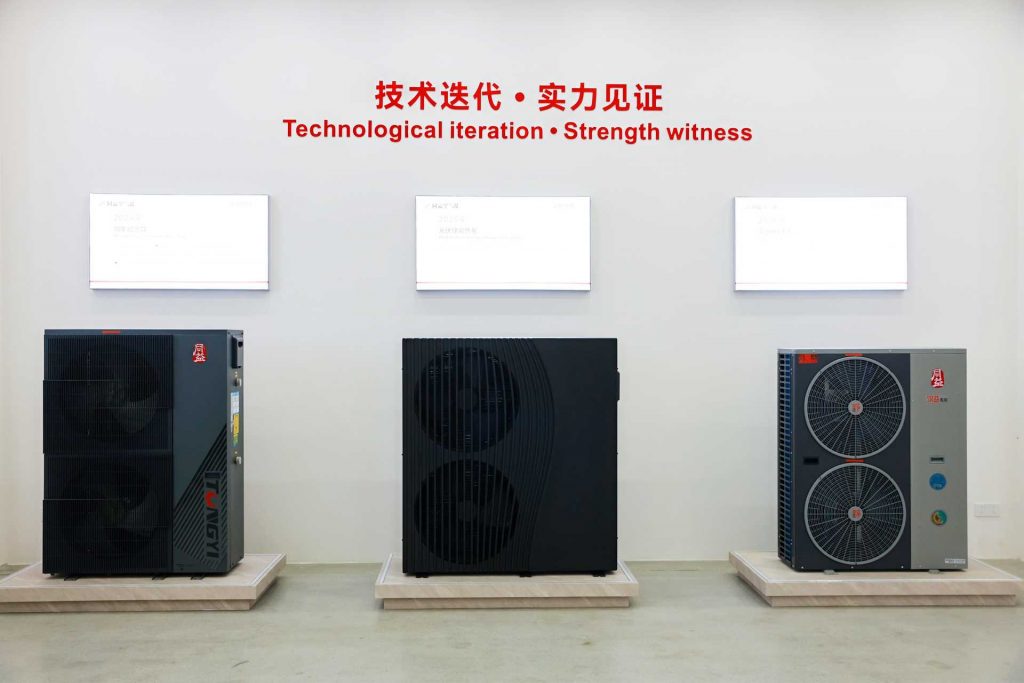
Residential inverter heat pump vs traditional on/off system
A traditional on/off heat pump operates at fixed output and cycles on and off when needed. A residential inverter heat pump adjusts compressor speed continuously to match real household demand.
This usually provides:
- more stable comfort
- lower cycling frequency
- improved seasonal efficiency
- quieter operation
- better performance under variable residential loads
For many homeowners, that makes inverter technology the more suitable choice for daily residential operation.
Why Tongyi focuses on intelligent inverter operation
At Tongyi, inverter technology is not treated as a simple variable-speed label. It is part of a broader system logic designed for modern energy conditions. In the RH Series, this includes a stronger alignment between thermal delivery, energy availability, and smarter control strategies.
That makes the system relevant not only for residential heating and cooling, but also for homes increasingly shaped by:
- solar production
- dynamic electricity conditions
- energy management logic
- future-oriented residential electrification
Conclusion
The value of a residential inverter heat pump lies in its ability to combine comfort, efficiency, and adaptability. For homeowners seeking a modern solution for residential heating and cooling, inverter technology offers a stronger response to real-world operating conditions than traditional fixed-output systems.
As homes become more connected to solar generation, dynamic tariffs, and wider energy management systems, the residential inverter heat pump is becoming a more natural baseline for efficient home comfort.
FAQ
What is a residential inverter heat pump?
A residential inverter heat pump is a home heating and cooling system that adjusts compressor speed continuously to match real demand, improving comfort and efficiency.
Is an inverter heat pump better for residential heating?
In many cases, yes. A residential inverter heat pump can provide more stable indoor comfort, lower cycling, and better seasonal performance than a traditional fixed-output system.
Does a residential inverter heat pump save energy?
Because it modulates output instead of working only at fixed capacity, an inverter heat pump can reduce unnecessary energy use, especially during partial-load residential operation.
Can a residential inverter heat pump work with solar panels?
Yes. Many modern systems can be integrated more effectively with residential solar generation and wider home energy management strategies.
What is the difference between inverter and non-inverter heat pumps?
A non-inverter system usually switches on and off at fixed output, while an inverter heat pump adjusts performance continuously according to demand.