

The residential heating landscape is no longer defined by simple efficiency metrics.
Energy prices fluctuate. Solar production is intermittent. Grid conditions are increasingly dynamic.
In this context, the question is not just how a heat pump performs—
but how intelligently it operates.
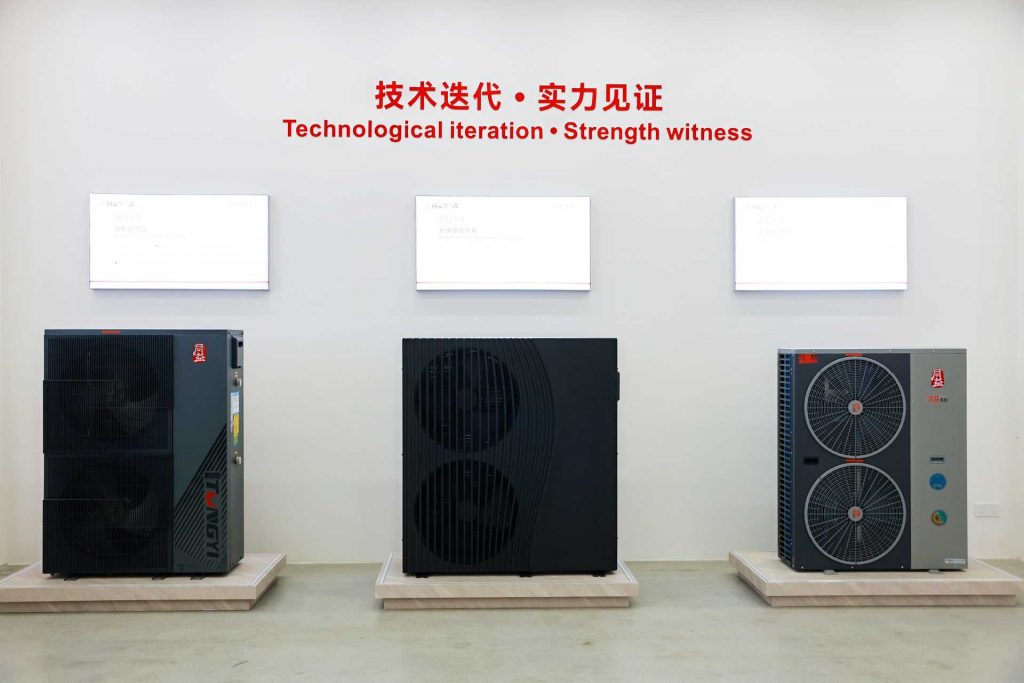
This is where smart inverter heat pump systems, such as the Tongyi RH Series, redefine expectations.
1. Energy-Aware Operation, Not Just Temperature Control
Traditional systems react to indoor temperature.
A smart inverter heat pump anticipates energy conditions:
- PV generation peaks
- dynamic electricity tariffs
- household consumption patterns
The RH Series introduces control logic where energy decisions precede thermal delivery.
Heating is no longer reactive—it becomes strategic.
2. True Inverter Modulation = Continuous Optimization
Inverter technology is often reduced to “variable speed.”
That’s an oversimplification.
In a properly engineered system, inverter control enables:
- continuous load matching
- reduced compressor cycling
- stable thermal output under partial load
The result:
- higher seasonal performance (SCOP)
- lower mechanical stress
- consistent comfort without peaks and drops
This is not efficiency as a specification.
It is efficiency as a behavior.
3. Native PV Compatibility (Not an Add-On)
Most systems claim “PV compatibility.”
Few are designed for it.
A PV-ready heat pump system like the RH Series can:
- absorb surplus solar production
- shift operation to high-generation windows
- reduce grid dependency without user intervention
- integrate with leading inverter ecosystems, including Huawei FusionSolar
This transforms the heat pump into a self-consumption optimizer, not just a load.
4. Integrated EMS Logic: From Device to System
The critical shift in modern HVAC is architectural.
A heat pump is no longer a standalone appliance—it is part of an energy system.
With embedded logic aligned to EMS principles, the RH Series:
- interprets external signals (tariffs, PV, demand)
- runs internal optimization routines
- executes precise modulation strategies
Without this layer, “smart” remains superficial.
With it, the system becomes predictive, responsive, and economically aligned.
5. Future-Proof Residential Heating
Regulation, grid interaction, and energy pricing are evolving rapidly across Europe.
A smart inverter heat pump is not just a product choice—it is a positioning decision.
The RH Series is designed to:
- operate within dynamic tariff environments
- adapt to grid-responsive frameworks
- integrate with broader home energy ecosystems
In short:
It is built for the next decade, not the last one.
The transition is already underway:
From heating systems → to energy systems
From efficiency ratings → to operational intelligence
Choosing a smart inverter heat pump is no longer a premium option.
It is becoming the baseline for residential performance.