

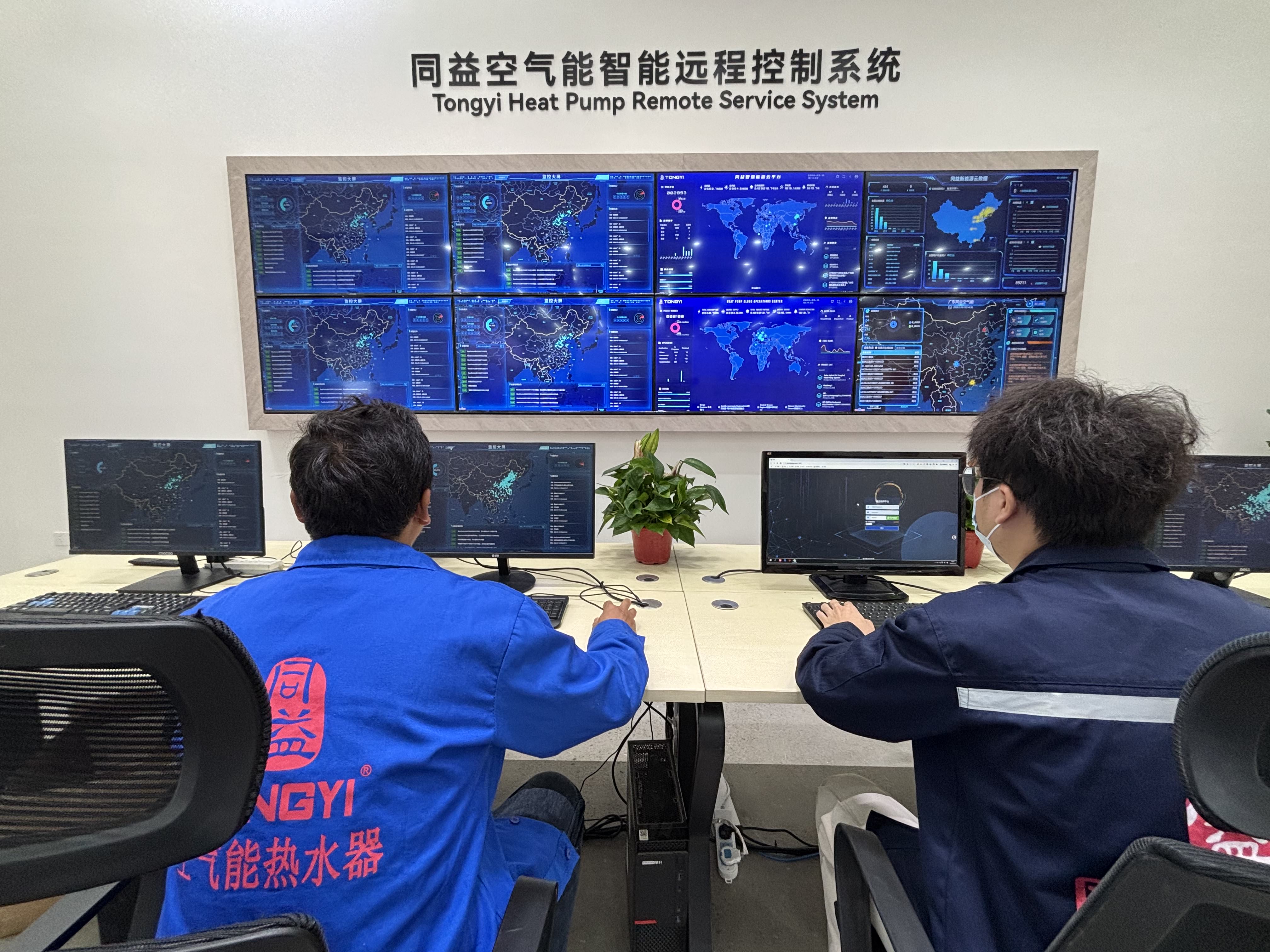
The expansion of Tongyi’s new manufacturing facility is not a symbolic milestone—it is a technical infrastructure upgrade designed to support the next generation of R290 air-to-water heat pump systems, particularly the RH Series developed for the European market.
This development directly addresses three structural constraints in the EU heat pump sector: regulatory compliance, refrigerant transition, and system intelligence integration.
1. Why a New Factory Matters (Beyond Capacity)
Most manufacturers scale production. Tongyi has restructured production architecture.
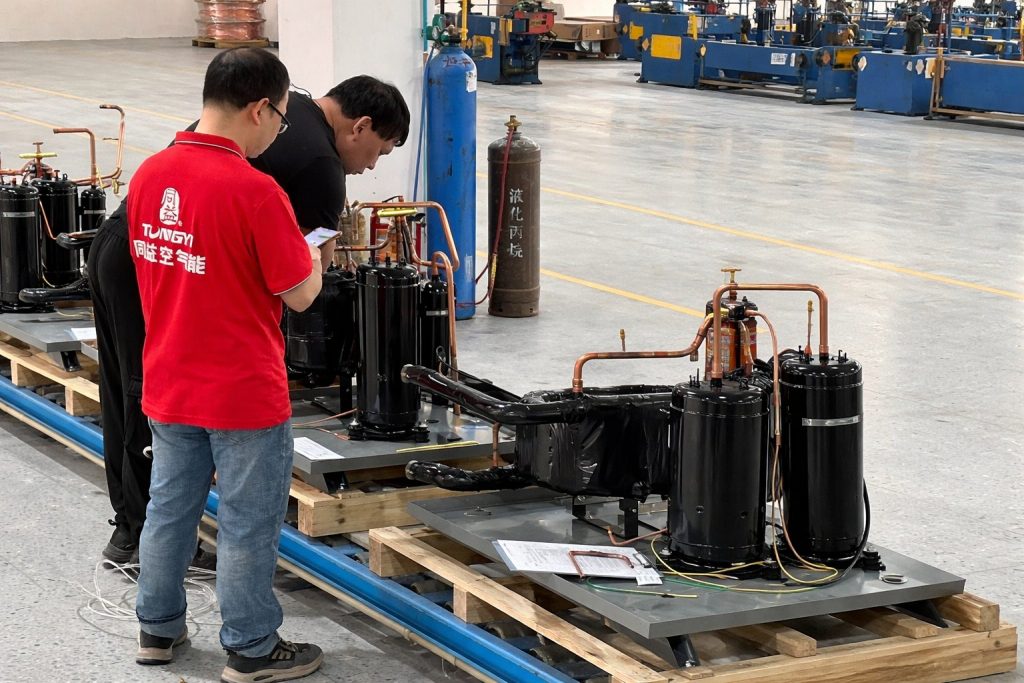
The new facility is engineered around:
- R290 (A3) refrigerant safety handling protocols
- Precision assembly for inverter-driven monobloc systems
- Integrated electronics production (HEMS-ready control systems)
This is critical because R290 is not simply a refrigerant change—it requires:
- Controlled charge environments
- Explosion-proof production zones
- Specialized testing and leak detection systems
Without this level of infrastructure, consistent EU-grade production is not achievable at scale.
2. Dedicated Lines for R290 RH Series
The RH Series is not a retrofit of previous platforms. It is built on a dedicated production logic:
- Optimized refrigerant circuit design for propane (R290)
- Low-noise mechanical configuration aligned with EU acoustic thresholds
- Pre-calibrated control systems for PV interaction and smart grid response
The factory enables:
- Stable COP performance across A7/W35 conditions
- Consistent low sound pressure levels required for BAFA/ZUM eligibility
- Pre-configured energy management logic (HEMS integration)
This is particularly relevant as older R32 systems face increasing regulatory pressure in Europe.
3. Embedded Intelligence: From Heat Pump to Energy System
A defining feature of the RH Series is that it is manufactured as an energy system component, not just a heating unit.
The new factory integrates:
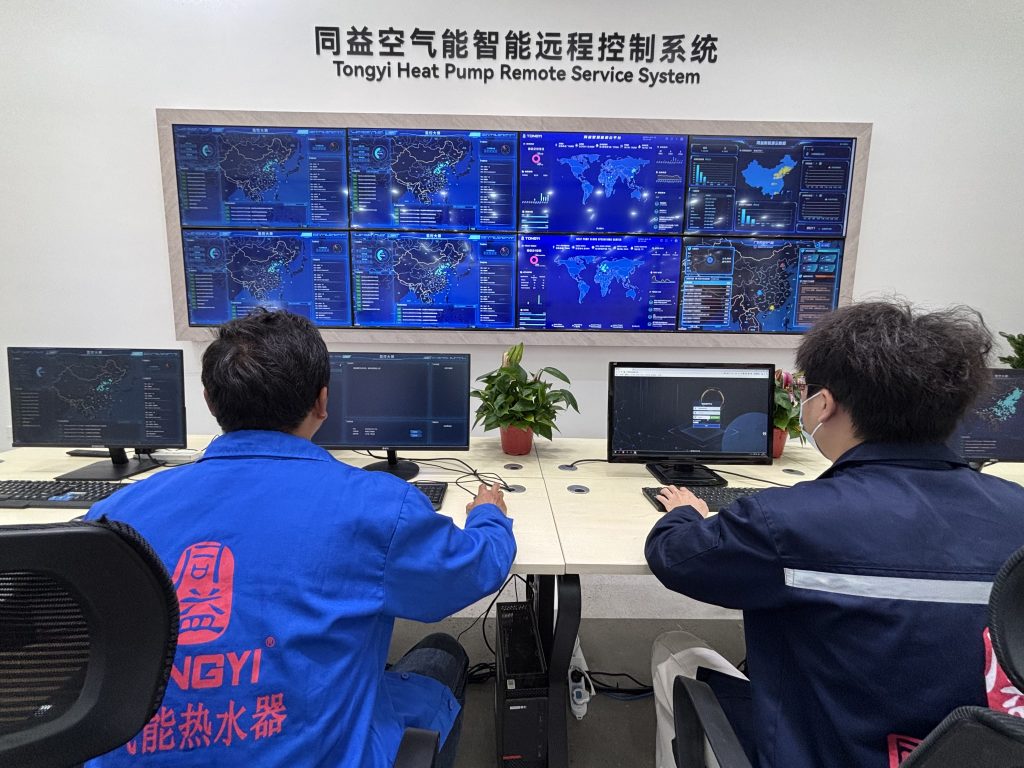
- IoT modules directly in production (not post-installed)
- Double-zone control systems calibrated at factory level
- EMS-ready architecture (PV, battery, dynamic tariffs)
This eliminates fragmentation seen in the EU market where:
- Installer-level integration introduces variability
- Third-party EMS systems create compatibility risks
Tongyi’s approach shifts integration upstream to manufacturing, ensuring:
- Predictable system behavior
- Faster installation cycles
- Reduced commissioning errors
4. European Compliance by Design
The facility has been structured to align with EU requirements from the outset:
- EPREL-ready product data structuring
- BAFA/ZUM-compatible performance documentation
- Design constraints aligned with Ecodesign and F-Gas evolution
This is not a compliance-after-production model.
It is compliance embedded in R290 air to water heat pump manufacturing, integrated directly into product design and the manufacturing workflow.
5. Strategic Implication for the EU Market
The combination of:
- R290-native engineering
- Factory-level EMS integration
- Compliance-driven production
positions the RH Series as part of a broader shift:
➡️ From heat pumps as appliances
➡️ To heat pumps as grid-interactive energy assets
This is where European demand is moving—especially with:
- PV self-consumption optimization
- Demand response programs
- Electrification of heating at scale
Tongyi’s new factory is not just increasing output—it is redefining how heat pumps are built for Europe.
The RH Series represents:
- A refrigerant transition (R32 → R290)
- A system transition (unit → energy node)
- A manufacturing transition (assembly → engineered integration)
For distributors, installers, and energy solution providers, this changes the value proposition entirely.