

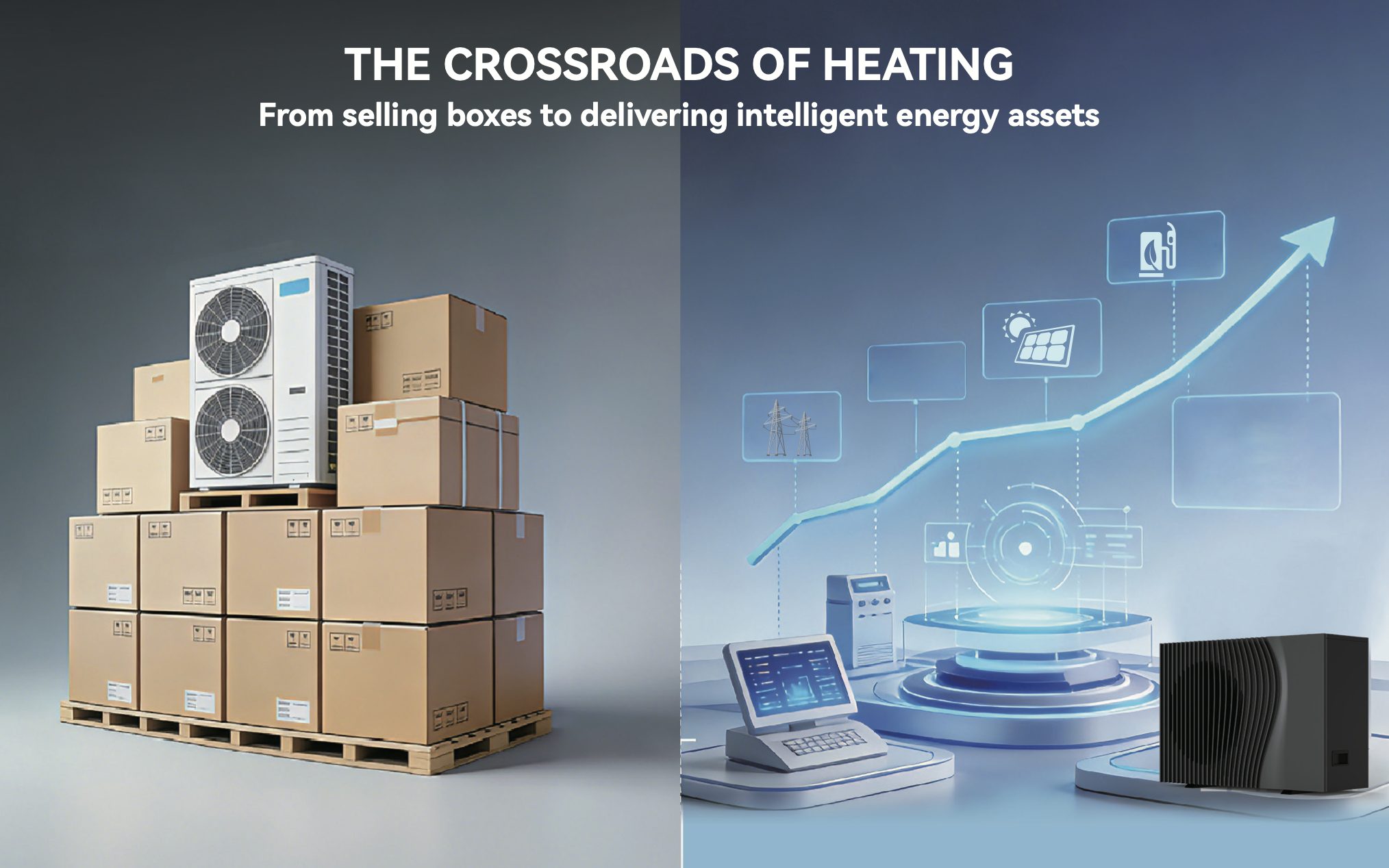
For heat pump distributors operating in Europe, the market is becoming more competitive and more complex. Product availability alone is no longer enough to secure long-term success. Increasingly, differentiation depends on how well a heat pump system performs once installed, and how easily it can be adapted to local market conditions.
This is where smart heat pump system design becomes a decisive commercial advantage for distributors.
Why Distributors Must Think Beyond the Outdoor Unit
In many markets, distributors face recurring challenges:
- High after-sales workload due to installation-related issues
- Performance gaps between datasheets and real operation
- Diverse installer skill levels
- Varying national regulations and incentive requirements
These challenges rarely originate from the compressor or refrigerant alone. They are typically the result of insufficient system-level design.
Distributors who offer well-engineered, system-ready solutions reduce risk across the entire value chain.
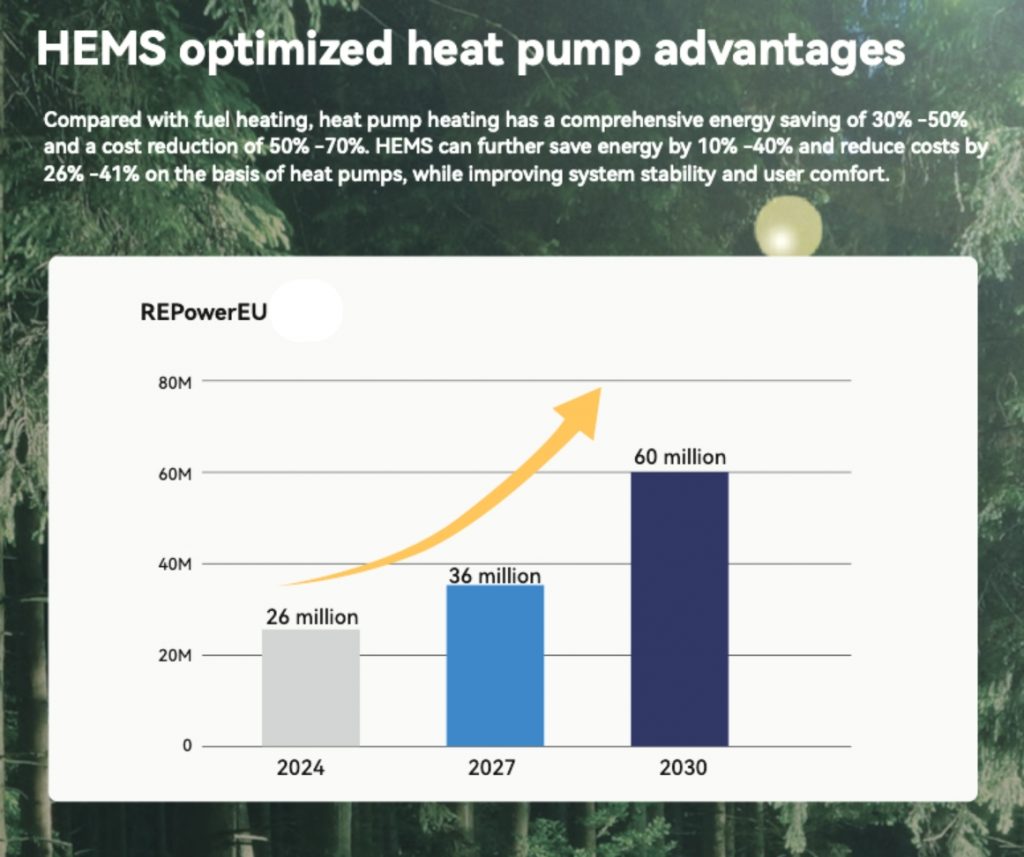
Smart Heat Pump System Design as a Risk-Reduction Tool
From a distributor perspective, smart heat pump system design directly translates into:
- Fewer commissioning problems
- More stable real-world performance
- Lower service and warranty exposure
- Higher installer satisfaction
By supplying systems with coherent hydraulics, validated control logic, and integration-ready layouts, distributors can standardize quality without over-controlling installers.
This is especially relevant in markets where installation is decentralized and performed by a wide range of contractors.
Easier Market Adaptation Across Europe
European heat pump markets are far from uniform. Climate, building stock, and regulatory frameworks differ significantly between regions.
Smart heat pump system design allows distributors to adapt solutions by:
- Adjusting hydraulic configurations without changing core units
- Localizing control strategies for climate and usage patterns
- Complying with national noise, safety, and subsidy requirements
- Offering differentiated system packages for new builds and retrofits
This flexibility is critical for distributors managing multiple territories or planning expansion into new markets.
Supporting Installers Without Increasing Complexity
A common distributor dilemma is balancing advanced technology with installer usability.
Smart heat pump system design addresses this by:
- Providing pre-engineered system concepts
- Reducing installation variability
- Simplifying commissioning procedures
- Limiting the risk of incorrect parameter settings
For distributors, this means scalable growth without proportional growth in technical support costs.

OEM Partnership: Where Design Becomes Strategy
For distributors working with OEM manufacturers, system design quality is a strategic selection criterion.
A strong OEM partner should offer:
- Modular system architectures
- Flexible hydraulic and control options
- Customization capability without full redesign
- Long-term product roadmap alignment
Smart heat pump system design enables distributors to build their own market identity while relying on a stable and adaptable technical platform.
Tongyi Perspective: Enabling Distributors to Compete on Value
Tongyi develops heat pump platforms with distributors in mind.
The focus is not only on manufacturing efficiency, but on commercial usability in real markets.
This includes:
- System-level engineering suitable for diverse EU conditions
- OEM-ready configurations for branding and portfolio building
- Control platforms prepared for future energy requirements
- Support for scalable distributor growth
The objective is to help distributors compete on reliability, adaptability, and long-term value, not only on price.
For distributors, success in the heat pump market is increasingly determined by system quality rather than unit specifications.
Smart heat pump system design reduces operational risk, improves installer relationships, and strengthens market positioning. In a crowded landscape, it is one of the few levers that delivers both technical and commercial impact.