
Heating That Thinks Before It Acts
Most heating systems still behave like switches.
They turn on when needed, off when not.
That logic is becoming obsolete.
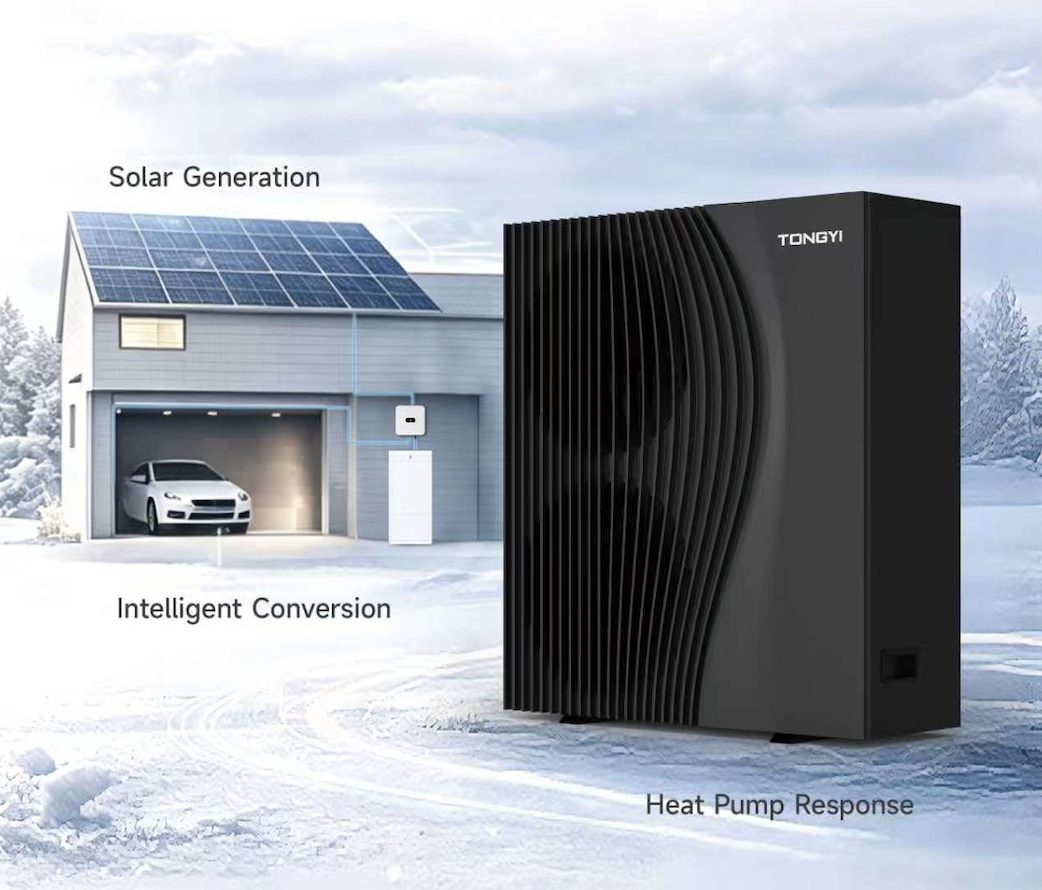
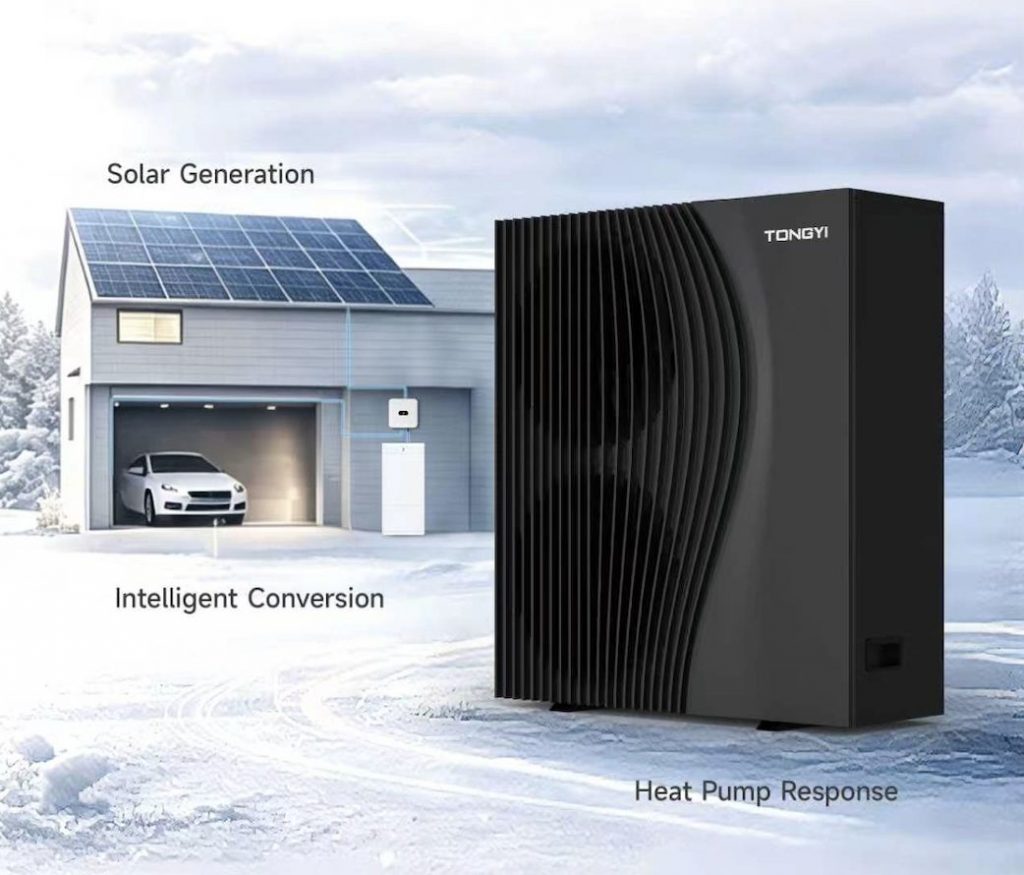
The next generation—illustrated by Tongyi R290 units integrated within the Huawei FusionSolar ecosystem—operates as a HEMS optimized heat pump, where a Home Energy Management System layer decides before activation.
This is not automation.
It is energy intelligence embedded at system level.
HEMS: The Brain Behind the System
The real shift is not the hardware—it is the decision-making layer.
A HEMS-optimized system continuously evaluates:
- Solar generation (real-time + forecast)
- Electricity pricing signals
- Household demand patterns
- Grid interaction conditions
Based on this, it orchestrates when and how the heat pump operates.
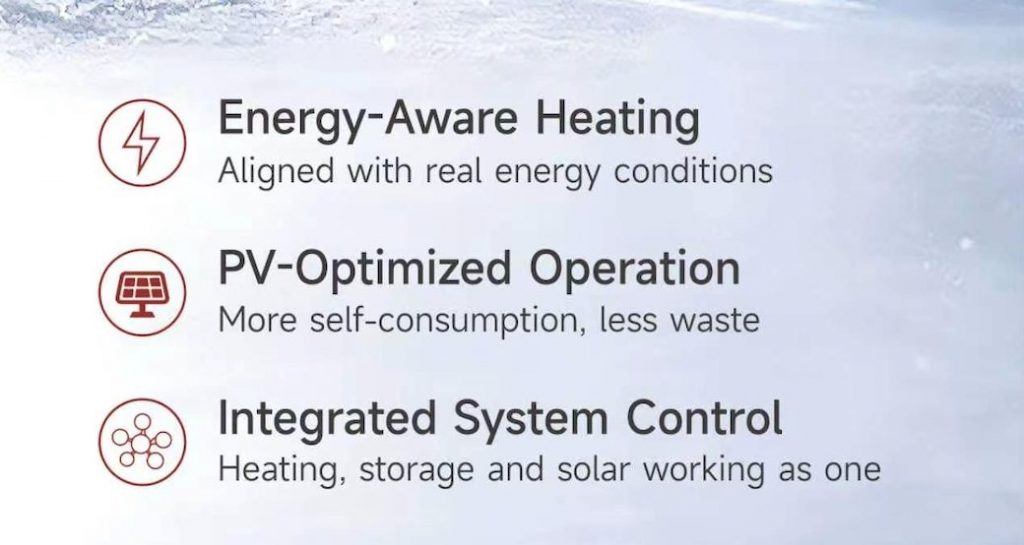
Heating becomes a managed energy process, not a standalone function.
From Reaction to Anticipation
Conventional systems respond to indoor temperature.
A HEMS-driven system anticipates energy conditions first.
This allows:
- Pre-heating during solar peaks
- Load shifting to lower tariff periods
- Reduced grid dependency
The outcome is not just efficiency—it is strategic energy use.
Solar Integration, Rewritten
In most installations, PV and heating coexist.
In a HEMS-optimized architecture, they cooperate.
The system aligns thermal demand with solar availability:
- Converts excess PV into stored heat
- Avoids unnecessary grid export
- Stabilizes internal consumption patterns
This transforms solar from a passive input into an active driver of heating logic.
Integrated Control: One Logic Across the System
The combination of Tongyi heat pump + Huawei ecosystem under HEMS enables:
- Coordinated heat pump modulation
- Battery interaction and prioritization
- Real-time system balancing
This is orchestration—not connectivity.
Energy is no longer distributed randomly.
It is allocated with intent.
Why This Matters in the Current Market
With dynamic pricing, grid constraints, and rising electrification, static systems lose efficiency over time.
HEMS optimized heat pump systems:
- Adapt automatically to external conditions
- Protect against price volatility
- Maximize on-site energy utilization
They are designed not just for today—but for how energy markets are evolving.
R290 in a HEMS Context
R290’s value increases significantly within a HEMS-controlled system:
- High efficiency enhances optimization cycles
- Stable performance supports predictive operation
- Environmental profile aligns with long-term regulation
It becomes part of a coordinated energy strategy, not just a component.
Conclusion: From Device to Energy Logic
The transition is structural:
❌ Heating as an isolated appliance
✅ Heating as part of an intelligent energy system
With HEMS at the core, the system:
- Interprets
- Decides
- Executes
Heating no longer reacts.
It operates with intent and timing.