R290 vs R32 Heat Pump Refrigerants

Choosing the right refrigerant is now a central question in heat pump design. In Europe and other regulated markets, refrigerant selection affects not only environmental impact, but also system design, safety strategy, regulatory suitability, and long-term product positioning. For many buyers, installers, and distributors, the key comparison is now R290 vs R32. Both are lower-impact alternatives compared with older refrigerants such as R410A, but they are not the same.

What is R290 in a heat pump?

R290 is propane used as a refrigerant. It is increasingly valued in heat pumps because it has a very low global warming potential and does not fall into the same fluorinated-gas category as refrigerants such as R32. This makes it highly relevant for low-GWP heat pump platforms, especially in Europe.

At the same time, R290 is classified as A3, which means it is flammable and must be managed through compliant engineering, charge control, installation logic, and safety standards. The right message is not alarmist language, but good design and proper application.

What is R32 in a heat pump?

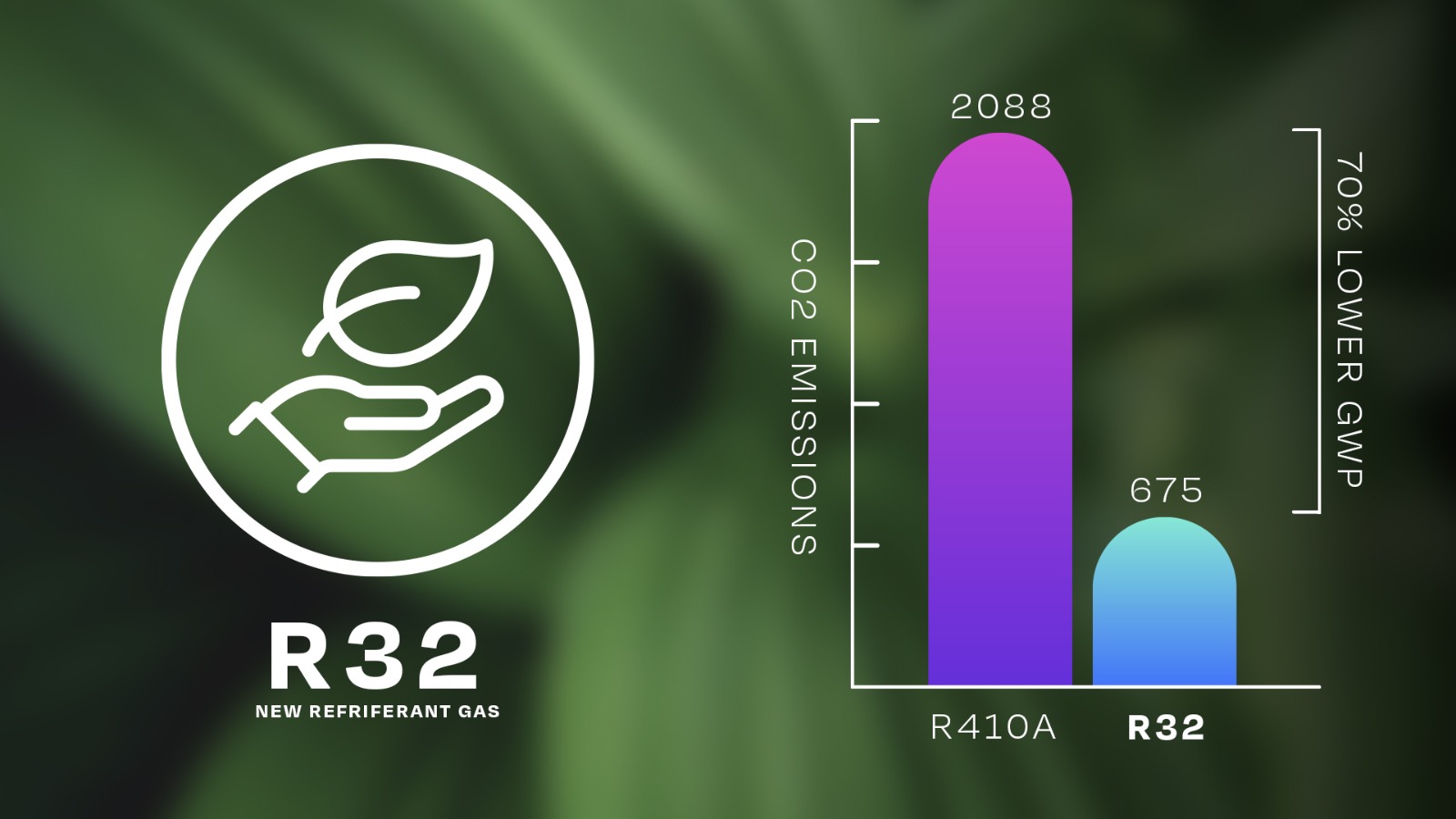
R32 is a fluorinated refrigerant with lower GWP than older mainstream options such as R410A, which is one reason it became widely used in heat pump and air-conditioning equipment. However, R32 should not be described as non-flammable. It is classified as A2L, meaning mildly flammable.

In practical terms, R32 has often been seen as a lower-GWP transitional refrigerant: an improvement over older high-GWP options, but less future-proof than ultra-low-GWP alternatives such as R290 in some market segments.

R290 vs R32: key differences

The comparison between R290 and R32 in heat pumps is not only technical. It is also environmental and regulatory.

R290 offers:

  • very low climate impact
  • strong alignment with low-GWP market direction
  • no fluorinated-gas burden in the same way as HFC refrigerants

R32 offers:

  • lower GWP than older legacy refrigerants
  • established familiarity in the market
  • a milder flammability class than R290

The trade-off is straightforward: R290 is usually stronger environmentally, while R32 is easier from a flammability-management perspective because it is A2L rather than A3.

Environmental impact

From an environmental perspective, R290 is generally the stronger option. The EU F-gas framework is pushing the market away from higher-GWP fluorinated gases and toward lower-impact alternatives in products such as heat pumps and air-conditioning systems.

R32 remains a lower-impact option compared with older refrigerants, but it is still an F-gas. That matters because EU restrictions increasingly focus on refrigerant type, GWP thresholds, product category, and market timing rather than only on traditional performance claims.

Safety and flammability

This is where many comparison pages become too simplistic.

R32 is not non-flammable. It is mildly flammable (A2L). R290 is more flammable (A3). So the correct comparison is not “R290 is flammable and R32 is safe,” but rather that the two refrigerants have different flammability classifications and therefore different engineering and installation implications.

For that reason, safety positioning should focus on standards compliance, engineering controls, charge management, and correct application design rather than on oversimplified marketing claims.

Regulation and market direction in Europe

Rather than saying “R32 is banned” or “R32 is being phased out everywhere,” it is more accurate to explain that the EU F-gas rules are tightening restrictions on fluorinated refrigerants in specific product categories over time. The exact outcome depends on equipment type, capacity, refrigerant GWP, and date.

That is one reason R290 is becoming more strategically important in Europe. It supports a lower-GWP pathway, but the regulatory answer should always be linked to the exact product category rather than to a blanket statement.

Which refrigerant is better?

There is no one-sentence answer for every case.

R290 may be the better choice when:

  • environmental positioning is the priority
  • long-term low-GWP strategy matters
  • the product architecture is designed around natural refrigerants
  • European market direction is a major consideration

R32 may remain relevant when:

  • the product platform is already designed around A2L refrigerants
  • the application benefits from a lower flammability class than A3
  • the target product category still supports that route under current rules

In other words, R290 is often the stronger long-term strategic refrigerant, while R32 can still be a practical option in the right applications.


FAQ

Is R290 better than R32 for heat pumps?

R290 is generally stronger from a climate-impact perspective because it has very low GWP, but the best choice still depends on system design, market requirements, and application conditions.

Is R32 flammable?

Yes. R32 is classified as A2L, which means mildly flammable.

Is R290 flammable?

Yes. R290 is classified as A3, so systems must be designed and installed with the appropriate safety controls.

Is R32 being banned in Europe?

The regulatory picture is more specific than a simple ban. EU rules introduce category-based restrictions over time depending on product type and refrigerant characteristics.

Why is R290 becoming more popular in heat pumps?

Because it combines very low climate impact with strong alignment to the direction of EU refrigerant policy.

REFRIGERANTS
carbon footprint of heat pumps
CERTIFICATIONS
COMPETITIVE ADVANTAGES

Discover the unique advantages that set us apart.

Silence

Reaching as low as 35dB(A), Silent Mode creates a tranquil atmosphere.

IoT (Internet of Things)

IoT Technology facilitates the remote monitoring and analysis of the heat pump’s status.

Twin Rotary

A Twin Rotary DC Inverter compressor results in a 30% reduction in energy consumption compared to traditional scroll compressors.

Smart Defrost

Tongyi has achieved the development of intelligent defrost processes, aimed at optimising the management of defrosting cycles in air-to-water heat pumps.

24/7 Remote Service

Benefit from round-the-clock remote service support, ensuring assistance whenever you need it, day or night.

Lead Time

Experience rapid deliveries with our swift lead time service, ensuring your needs are met promptly and efficiently.

DC Inverter EVI Tech

DC Inverter EVI Technology effectively reduces power consumption and improves the heating capacity of heat pump units to ensure stable performance even at ambient temperatures as low as -25°C.

Smart Control • Wifi

Experience a unique convenience with Tongyi Heat Pump’s smart control feature.

NEWS & EVENTS

Stay connected with our latest news and upcoming events.

NEWS

Welcome to Tongyi’s blog! We specialize in Air-to-Water heat pumps. Stay updated on HVAC and renewable energy innovations and join us in creating a greener future.

Visit our Blog
EVENTS

Discover our participation in past exhibitions and save the date for future events to discover the potential of sustainable solutions to contribute to a brighter future.

Discover past & Upcoming Events
EuropeEventsFrom Heat Pump to Energy Node: A New Role in the Energy System
24 de April de 2026

From Heat Pump to Energy Node: A New Role in the Energy System

Introduction At the SEAI Energy Show 2026 in Dublin, one message stood out clearly:heat pumps are no longer standalone heating devices. They are evolving into active energy nodes—intelligent systems that…
EuropeKnowledgeFrom Heat Pumps to Grid Assets: Integrating BESS under 14a EnWG
17 de April de 2026

From Heat Pumps to Grid Assets: Integrating BESS under 14a EnWG

The European energy landscape is shifting from passive consumption to active energy orchestration. Nowhere is this more evident than in Germany, where 14a EnWG heat pump BESS integration is redefining…
EuropeKnowledge#TechFriday: Heating That Thinks Before It Acts
10 de April de 2026

#TechFriday: Heating That Thinks Before It Acts

Heating That Thinks Before It Acts Most heating systems still behave like switches.They turn on when needed, off when not. That logic is becoming obsolete. The next generation—illustrated by Tongyi…