Heat Pump Silent Mode: Technology for Quieter Operation

Quiet operation is an important consideration when installing a heat pump near homes, terraces or neighbouring properties. Tongyi heat pumps use inverter control, vibration-reduction measures and compressor design to help reduce operating noise while maintaining heating performance.

Heat pump silent mode can further reduce noise during selected operating periods by adjusting system operation when lower acoustic output is preferred.

How Heat Pump Silent Mode Works

Heat pumps operate at different loads depending on outdoor temperature, heating demand and system settings. During periods when full output is not required, inverter technology allows the compressor and fan to operate at lower speeds.

Silent mode uses this flexibility to prioritise quieter operation. This can be particularly useful during the evening, at night or when the outdoor unit is installed close to occupied areas.

The objective is not to eliminate sound completely, but to manage operating noise while maintaining comfortable indoor temperatures.

Inverter Technology for Quieter Operation

Unlike fixed-speed systems that repeatedly switch between full power and off, inverter-controlled heat pumps can continuously adjust their output according to demand.

This smoother operation can help reduce sudden changes in compressor and fan speed. It also supports more stable heating performance and can reduce unnecessary mechanical stress during normal operation.

Tongyi heat pumps use DC inverter technology to balance heating demand, efficiency and acoustic performance.

Brushless DC Motor Design

The motor is another important contributor to heat pump noise.

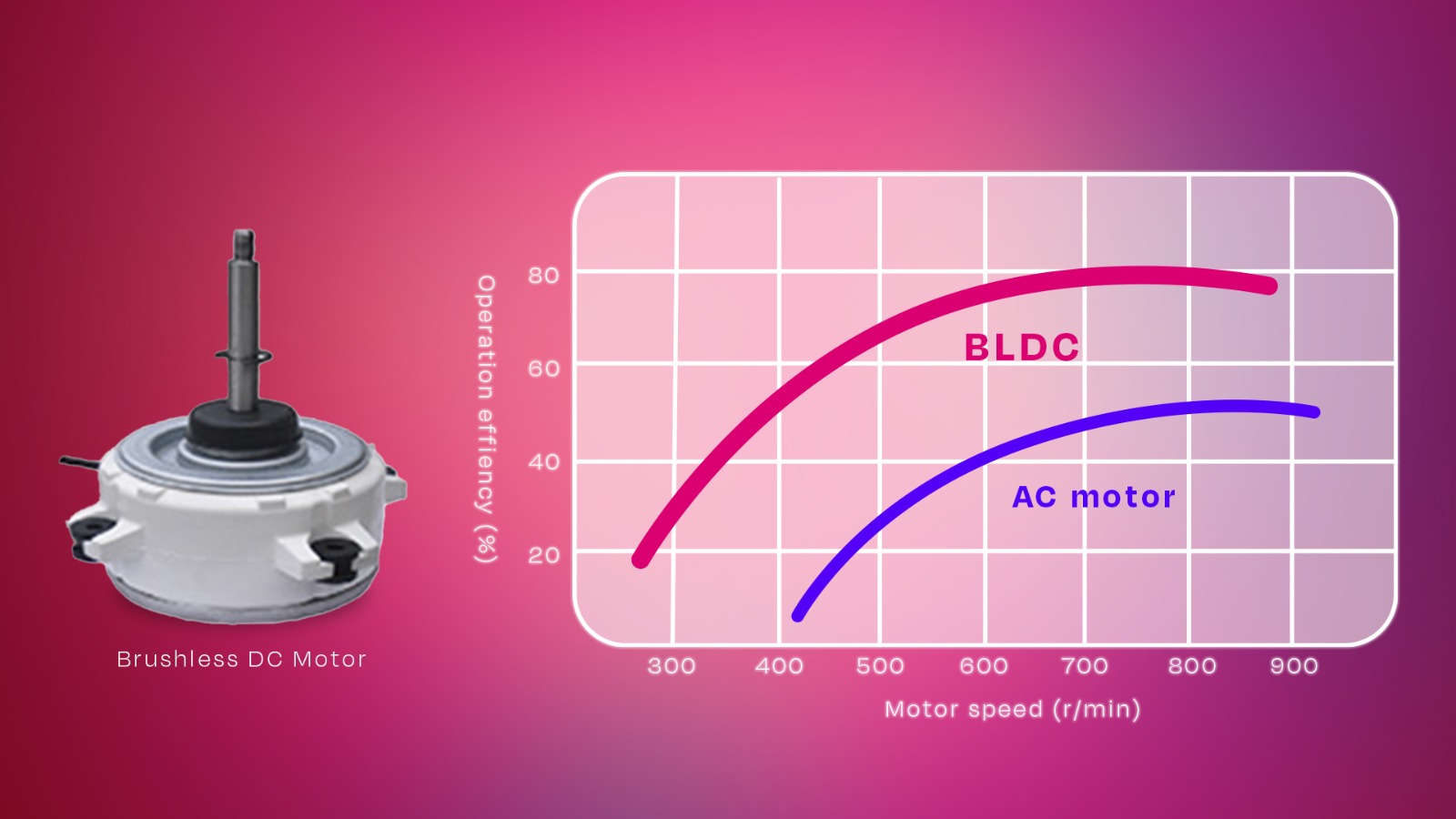
Tongyi systems use brushless DC motor technology designed for efficient and controlled operation. Permanent-magnet rotor technology and high-density copper windings help provide precise motor control while limiting unnecessary vibration.

By controlling motor speed according to operating demand, the system can reduce both energy use and acoustic output compared with continuous full-speed operation.

Twin Rotary Compressor Technology

Compressor design has a major influence on both vibration and sound.

Tongyi heat pumps use twin rotary compressor technology in selected systems. The dual-rotary structure helps balance rotational forces inside the compressor, reducing vibration compared with less balanced compressor designs.

Lower vibration can contribute to quieter system operation while also supporting stable inverter performance.

For a closer look at the compressor technology, see how our twin rotary compressor design supports heat pump efficiency and vibration control.

Reducing Vibration and Operating Noise

Heat pump noise is not determined by the compressor alone. The overall design of the outdoor unit also affects acoustic performance.

Measures that can help reduce transmitted noise include:

  • controlled compressor speed
  • optimised fan operation
  • vibration-reduction design
  • stable motor operation
  • appropriate component mounting
  • correct installation of the outdoor unit

Good installation practice is also important. The location of the unit, distance from walls and neighbouring properties, mounting surface and surrounding structures can all influence how sound is perceived.

Quiet Operation Without Sacrificing Comfort

Silent mode is intended to provide greater flexibility when lower operating noise is desirable.

Depending on heating demand and outdoor conditions, the system may temporarily operate at a reduced output level to prioritise acoustic comfort. Normal operating conditions can then resume when greater heating capacity is required.

This makes silent mode particularly useful for residential installations where both heating performance and everyday comfort are important.

Understanding Heat Pump Noise

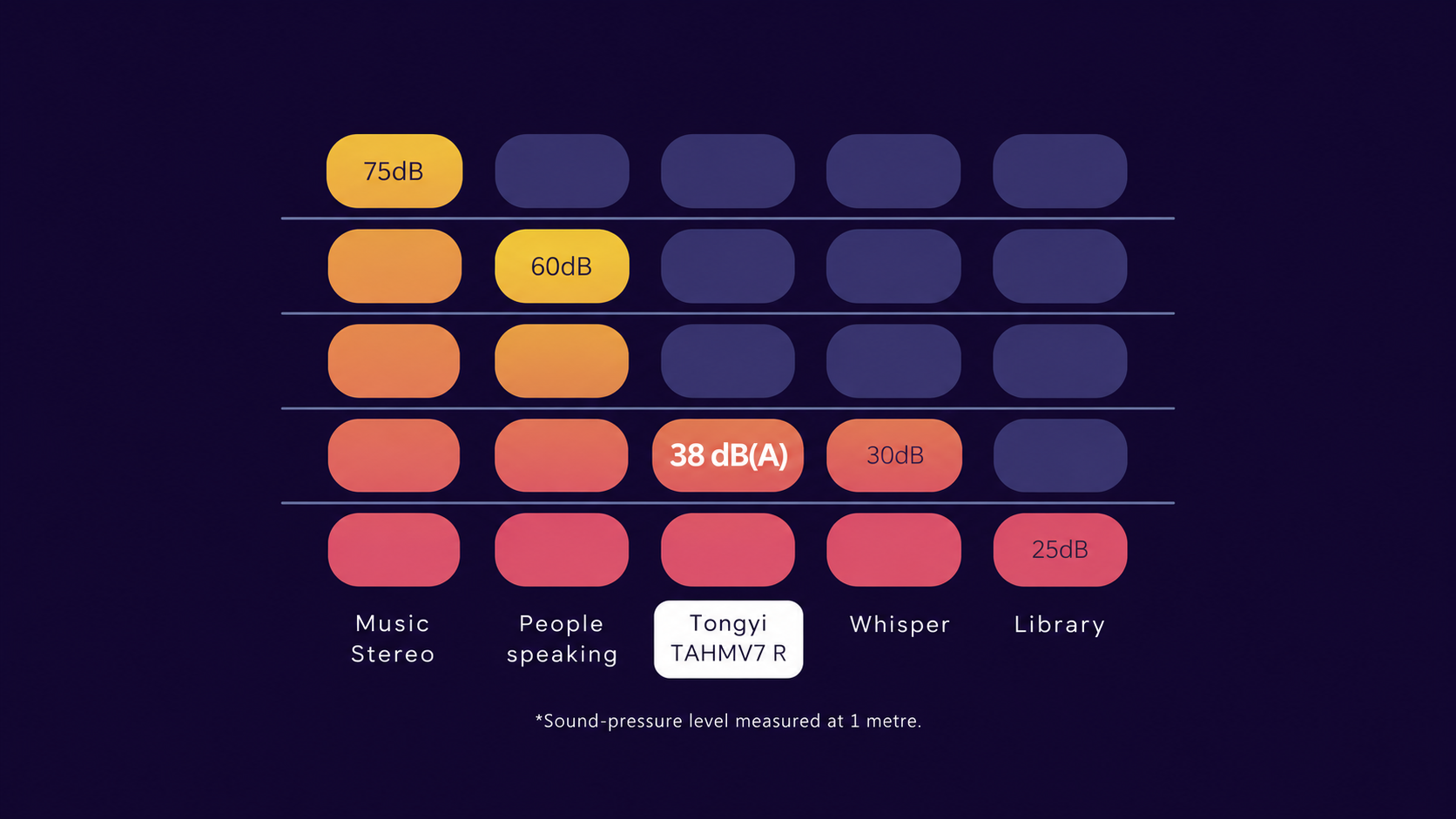
Actual sound levels depend on several factors, including heat-pump model, operating load, installation conditions, outdoor temperature and distance from the unit.

For a broader explanation of sound levels, installation factors and how heat-pump noise is measured, read our guide to R290 heat pump noise.


SOUND LEVELS
SOUND LEVELS
CERTIFICATIONS
COMPETITIVE ADVANTAGES

Other competitive advantages of our heat pumps

IoT (Internet of Things)

IoT Technology facilitates the remote monitoring and analysis of the heat pump’s status.

Twin Rotary

A Twin Rotary DC Inverter compressor results in a 30% reduction in energy consumption compared to traditional scroll compressors.

Smart Defrost

Tongyi has achieved the development of intelligent defrost processes, aimed at optimising the management of defrosting cycles in air-to-water heat pumps.

24/7 Remote Service

Benefit from round-the-clock remote service support, ensuring assistance whenever you need it, day or night.

R32 | R290

These two environmentally friendly refrigerants lead to a substantial decrease in Global Warming Potential (GWP) and carbon emissions.

Lead Time

Experience rapid deliveries with our swift lead time service, ensuring your needs are met promptly and efficiently.

DC Inverter EVI Tech

DC Inverter EVI Technology effectively reduces power consumption and improves the heating capacity of heat pump units to ensure stable performance even at ambient temperatures as low as -25°C.

Smart Control • Wifi

Experience a unique convenience with Tongyi Heat Pump’s smart control feature.

NEWS & EVENTS

Stay connected with our latest news and upcoming events.

NEWS

Welcome to Tongyi’s blog! We specialize in Air-to-Water heat pumps. Stay updated on HVAC and renewable energy innovations and join us in creating a greener future.

Visit our Blog
EVENTS

Discover our participation in past exhibitions and save the date for future events to discover the potential of sustainable solutions to contribute to a brighter future.

Discover past & Upcoming Events
EuropeKnowledgeHigh-Temperature R290 Heat Pumps: What 35°C, 55°C, 65°C and 75°C Really Mean
September 25, 2026

High-Temperature R290 Heat Pumps: What 35°C, 55°C, 65°C and 75°C Really Mean

When comparing air-to-water heat pumps, one specification attracts a lot of attention: maximum water temperature. Modern R290 heat pumps can reach considerably higher water temperatures than many earlier generations of…
EuropeKnowledgeDo Heat Pumps Need a Buffer Tank? When It Helps — and When It Doesn’t
September 18, 2026

Do Heat Pumps Need a Buffer Tank? When It Helps — and When It Doesn’t

When planning an air-to-water heat pump system, one question appears again and again: Do heat pumps need a buffer tank? The answer is not always yes. A buffer tank can…
heat pump efficiency in cold weatherEuropeKnowledgeWhy Heat Pump Efficiency Changes in Cold Weather: COP, Capacity and R290 Explained
September 11, 2026

Why Heat Pump Efficiency Changes in Cold Weather: COP, Capacity and R290 Explained

Air-to-water heat pumps extract heat from outdoor air and transfer it into a home's heating system. That process works even when the temperature outside falls below freezing. However, heat pump…