Heat Pump Remote Control: Smart WiFi Control for More Flexible Comfort
A modern heat pump remote control system does more than switch a unit on or off. It allows users to monitor, adjust, and manage heating performance more conveniently through smart WiFi connectivity, touchscreen controls, and mobile access.
As heat pumps become part of smarter homes and more connected energy systems, remote control is no longer just an extra feature. It is becoming an important part of how homeowners and users interact with comfort, efficiency, and day-to-day system management.
What is heat pump remote control?
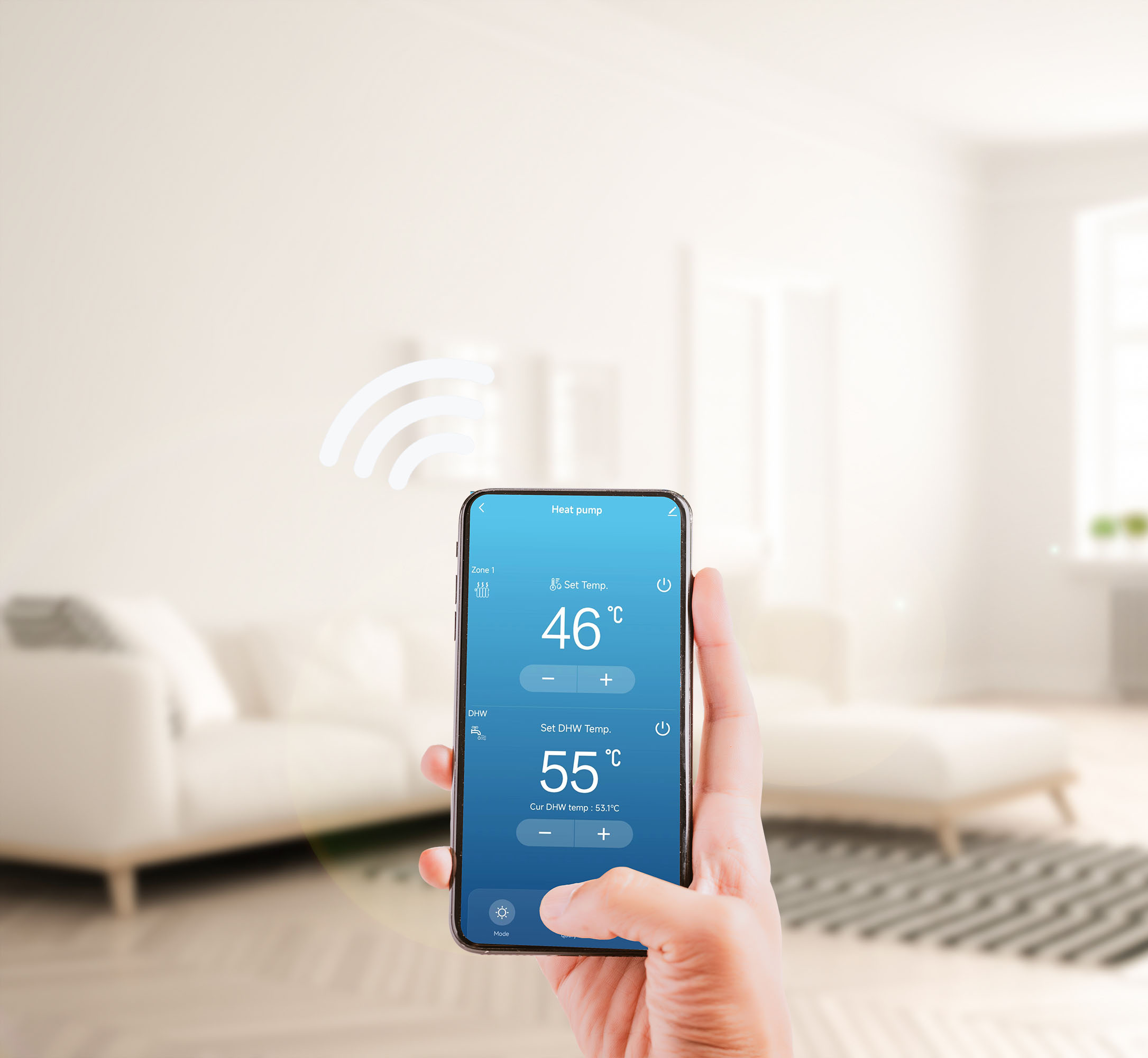
Heat pump remote control refers to the ability to operate and monitor a heat pump through digital interfaces such as a touchscreen controller, mobile app, or WiFi-connected control system. Instead of adjusting settings only at the unit itself, users can manage key functions more easily and more flexibly.
Depending on system design, remote control can allow users to:
- change temperature settings
- switch operating modes
- monitor performance status
- manage heating and cooling preferences
- improve convenience during daily use
- respond more quickly to changing comfort needs
This makes the heat pump easier to manage both inside and outside the home.
What does a heat pump controller do?
A heat pump controller lets you set the target temperature, select available operating modes and check system status. A local controller provides access at the property, while WiFi connectivity can enable remote access through a compatible app. Available functions and app compatibility depend on the heat pump model and control configuration.
Why WiFi control matters in modern heat pump systems
Traditional control logic often requires users to interact directly with the unit or a local controller. A WiFi heat pump control system expands that experience by allowing communication through connected interfaces.
This provides several practical advantages:
- faster access to system settings
- more convenient day-to-day adjustments
- better visibility into operating status
- easier comfort management from different locations
- stronger connection between the heat pump and the wider smart home environment
As residential heating becomes more digital, these functions are increasingly expected rather than exceptional.
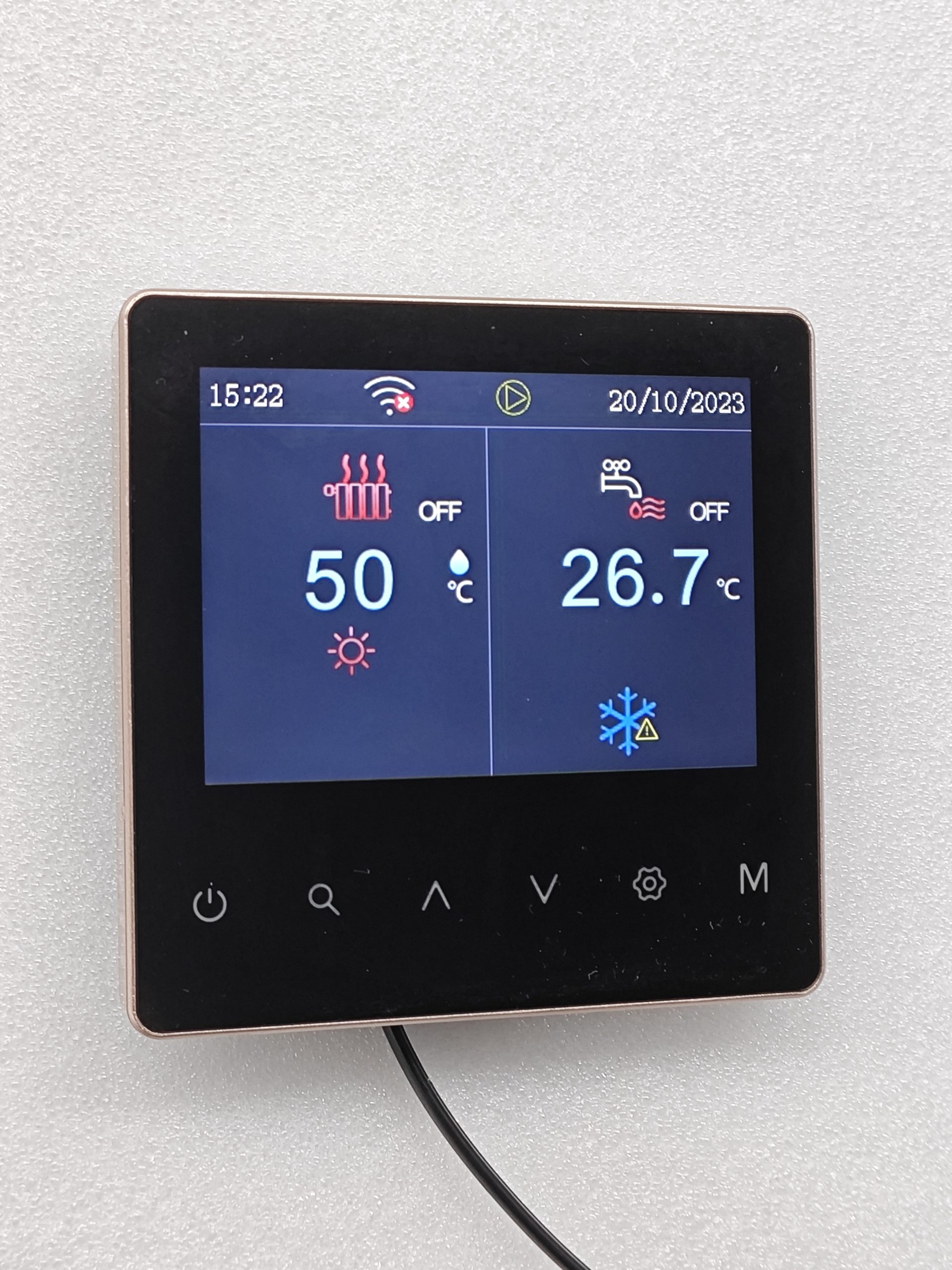
Smart touchscreen control for easier operation
A modern touchscreen controller improves the user experience by making system interaction more intuitive. Instead of relying on basic manual buttons or complex menu structures, a color display can provide a clearer and more accessible way to manage the system.