

When planning an air-to-water heat pump system, one question appears again and again:
Do heat pumps need a buffer tank?
The answer is not always yes.
A buffer tank can be useful in some heat pump systems. It can increase water volume, help maintain stable flow and reduce excessive compressor cycling.
However, a well-designed system may not always require one.
The correct answer depends on the heat pump, the heating system and the hydraulic design.
So, what exactly does a buffer tank do?
What Is a Heat Pump Buffer Tank?
A heat pump buffer tank is a water vessel connected to the heating circuit.
Unlike a domestic hot water cylinder, its main purpose is not to provide hot water for showers or taps.
Instead, it stores water from the heating system.
This extra water volume can help the heat pump operate under more stable thermal and hydraulic conditions.
Depending on the system design, a buffer tank may be installed in series or used as part of a hydraulic separation arrangement.
Its exact role therefore depends on the complete heating system.
Why Does System Water Volume Matter?
A heat pump needs enough water circulating through the heating system to absorb and distribute the heat it produces.
Imagine a small heating circuit with only a limited amount of water.
The heat pump starts. The water temperature rises quickly. The target temperature is reached, so the compressor stops.
Soon afterwards, the water cools and the heat pump starts again.
If this happens too often, the system may experience short cycling.
Adding more water volume can slow these temperature changes.
As a result, the heat pump may operate for longer and more stable periods.
This is one reason a buffer tank can be useful.
What Is Heat Pump Short Cycling?
Short cycling happens when a heat pump repeatedly starts and stops over short periods.
Several factors can contribute to this, including:
- an oversized heat pump;
- insufficient system water volume;
- a small active heating area;
- frequent opening and closing of heating zones;
- unsuitable control settings;
- or poor hydraulic design.
Frequent cycling is generally undesirable.
An inverter heat pump is designed to adjust its output according to heating demand. However, even an inverter system has a minimum operating capacity.
If the building needs less heat than the heat pump can deliver at its minimum output, additional water volume can sometimes help extend operating time.
A buffer tank can therefore be useful in certain systems.
However, it should not be used to compensate for incorrect heat pump sizing.
Correct system design comes first.
Does Every Heat Pump Need a Buffer Tank?
No.
This is the most important point.
A buffer tank is not automatically required in every air-to-water heat pump installation.
Some heating systems already contain enough water volume.
A large underfloor heating circuit, for example, may provide substantial system volume and stable flow.
In such cases, the heating system itself may already provide enough thermal mass for stable heat pump operation.
Manufacturer requirements also vary.
Some systems specify a minimum water volume. Others focus mainly on maintaining a minimum flow rate under all operating conditions.
For this reason, there is no universal rule that says every heat pump must have a buffer tank.
Always follow the technical requirements of the specific heat pump and the hydraulic design of the installation.
When Can a Buffer Tank Be Useful?
There are several situations where a buffer tank can help.
1. When System Water Volume Is Too Low
A small heating circuit can heat up very quickly.
Adding a buffer tank increases the total amount of water in the system.
This can help create longer operating cycles and more stable temperature changes.
2. When Heating Zones Frequently Open and Close
Modern homes may contain several heating zones.
Thermostatic valves, actuators or zone valves can close when individual rooms reach their target temperature.
As zones close, the active water volume and flow available to the heat pump may decrease.
A correctly designed buffer arrangement can help maintain more stable hydraulic conditions.
Industry guidance from the Heat Pump Association also shows buffer tanks being used to provide additional system volume and hydraulic separation in zoned air-to-water heat pump systems.
3. When Hydraulic Separation Is Needed
Sometimes the heat pump circuit and the building heating circuits have different flow requirements.
In these situations, a buffer tank can form part of a hydraulically separated system.
This can allow the heat pump side to maintain stable flow while the heating circuits respond independently to changing demand.
However, hydraulic separation must be designed carefully.
Poor system design can introduce unnecessary mixing, additional pumping energy or heat losses.
4. During Defrost Operation
Air-to-water heat pumps may need to defrost their outdoor heat exchanger during cold and humid weather.
During a defrost cycle, the system requires thermal energy.
Adequate water volume in the heating circuit can help support this process.
Depending on the heat pump and system configuration, additional stored water may therefore be useful.
Again, the correct arrangement should follow the manufacturer’s technical requirements.
Does a Buffer Tank Improve Heat Pump Efficiency?
Not automatically.
This distinction is important.
A buffer tank can improve operating stability when the system genuinely needs additional volume or hydraulic separation.
For example, reducing excessive short cycling may help the complete system operate more effectively.
However, simply installing a large buffer tank does not automatically increase COP.
A buffer tank also adds another component to the system.
It can introduce:
- heat losses;
- additional space requirements;
- extra pipework;
- and, in some configurations, another circulation pump.
Poor hydraulic design can also reduce system efficiency.
Therefore, the question should not be:
“Will a buffer tank make my heat pump more efficient?”
A better question is:
“Does this system need additional water volume or hydraulic separation to allow the heat pump to operate correctly?”
That is a system-design question.
Buffer Tank vs Domestic Hot Water Tank
A buffer tank and a domestic hot water tank are not the same thing.
A buffer tank stores water from the space-heating or cooling circuit.
A domestic hot water tank stores hot water for showers, sinks and other household uses.
They perform different functions.
Depending on the installation, a system may have:
- a buffer tank;
- a domestic hot water cylinder;
- both;
- or, in some cases, neither.
The correct arrangement depends on the building and the heating and hot-water requirements.
What About Underfloor Heating?
Underfloor heating can provide a large amount of circulating water.
It also usually operates at relatively low temperatures.
Both characteristics can be favourable for heat pump operation.
As a result, some underfloor heating systems may already provide enough water volume without a separate buffer tank.
However, zoning can change this.
If actuators regularly close large sections of the floor circuit, the active system volume and flow may fall significantly.
Even with underfloor heating, the hydraulic design therefore needs to be checked carefully.
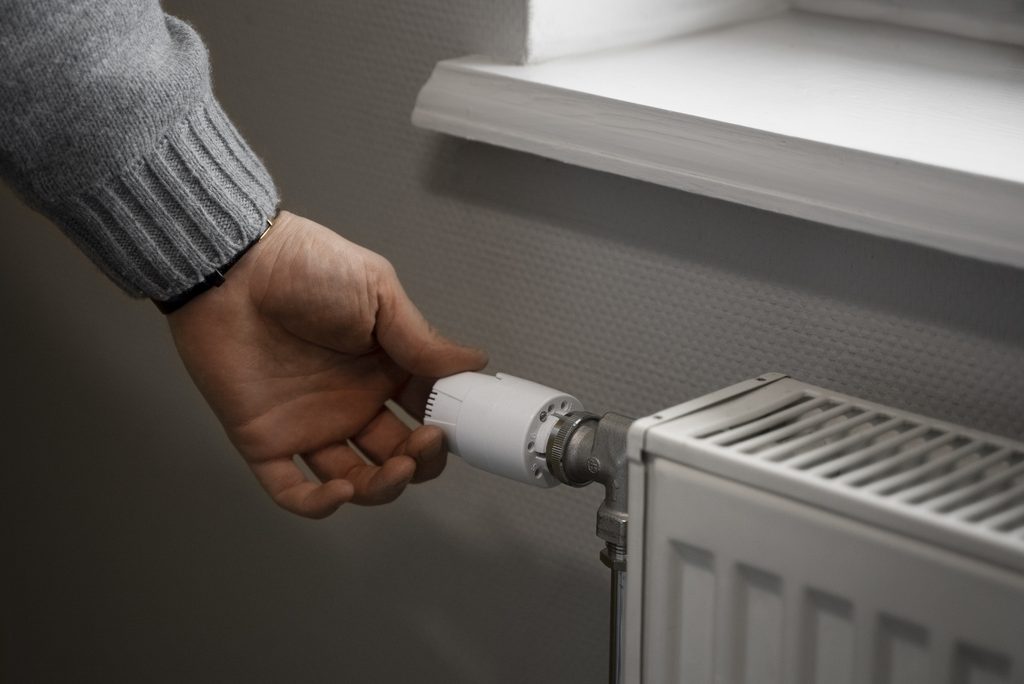
What About Radiator Systems?
The same principle applies to radiators.
The important question is not simply whether the building has radiators.
Installers should consider:
- total system water volume;
- minimum required flow;
- thermostatic radiator valves;
- zoning;
- building heat demand;
- heat pump modulation;
- and manufacturer requirements.
A radiator system with substantial water volume and stable flow may behave very differently from a small, heavily zoned system.
This is why buffer tank decisions should always be based on the complete hydraulic system.
How Large Should a Heat Pump Buffer Tank Be?
There is no universal answer.
You may see simple sizing rules based on a certain number of litres per kilowatt of heat pump capacity.
These rules can provide an initial reference, but they should not replace a proper system calculation or the manufacturer’s requirements.
Buffer tank sizing depends on several factors, including:
- minimum heat pump output;
- required minimum system volume;
- desired compressor run time;
- heating-system temperature difference;
- existing water volume;
- zoning strategy;
- and hydraulic configuration.
Therefore, bigger is not automatically better.
The objective is to provide the volume and hydraulic behaviour that the system actually requires.
Tongyi Heat Pumps and Buffer Tanks
Tongyi offers buffer tanks as part of its wider air-to-water heat pump system portfolio.
A buffer tank can provide additional system water volume where the heating installation requires it.
However, the decision to install one should still be based on the needs of the complete system.
For an R290 air-to-water heat pump, several elements must work together:
heat pump + emitters + pipework + controls + pumps + water volume + building demand
A good heat pump installation is not simply a collection of components.
It is a complete hydraulic and thermal system.
So, Do Heat Pumps Need a Buffer Tank?
Sometimes.
But not always.
A buffer tank can be valuable when a system needs:
- additional water volume;
- longer and more stable operating cycles;
- hydraulic separation;
- stable flow despite zoning;
- or additional thermal capacity under specific operating conditions.
However, systems with sufficient water volume and stable hydraulic conditions may operate correctly without one.
The first step should therefore never simply be:
“Add a buffer tank.”
Instead, determine what the heat pump requires and what the heating system can provide.
Then design the hydraulic system accordingly.
The key principle is simple:
A buffer tank should solve a defined system requirement — not simply be added because the installation contains a heat pump.
#FridayTech | Tongyi Heat Pump
test