
The European energy landscape is shifting from passive consumption to active energy orchestration. Nowhere is this more evident than in Germany, where 14a EnWG heat pump BESS integration is redefining how flexible loads—such as heat pumps—interact with the grid.
For manufacturers and system integrators, the opportunity is clear:
👉 Combine heat pumps + BESS (Battery Energy Storage Systems) to create grid-responsive energy systems.
What is §14a EnWG and Why It Matters
§14a EnWG is the German regulation for controllable consumption devices, including heat pumps and EV chargers, allowing distribution system operators to temporarily reduce grid power in defined situations while users receive reduced grid fees or tariff benefits.
The concept of 14a EnWG heat pump BESS integration is becoming central to residential energy system design in Germany. Under §14a EnWG, heat pumps are classified as controllable loads, meaning their operation can be temporarily limited by grid operators. To maintain system stability and user comfort, integrating a Battery Energy Storage System (BESS) can become a strategic design choice, especially where installers, homeowners or aggregators want to maintain comfort, increase PV self-consumption and improve flexibility under grid-oriented operation.
In exchange, users benefit from:
- Reduced grid fees
- Preferential tariffs
- Faster grid connection approvals
However, this introduces a constraint:
⚠️ Heat pumps must now operate within grid-defined flexibility windows
The Limitation: Heat Pumps Alone Are Not Enough
A standalone heat pump—even an inverter-driven R290 unit—has limited flexibility:
- It reacts to temperature demand, not grid signals
- It cannot store energy
- It may face performance constraints under load curtailment
This is where BESS becomes critical.
BESS + Heat Pump = Energy Buffering Layer
A Battery Energy Storage System (BESS) introduces a buffering mechanism between the grid and thermal demand.
Core Functions:
- Load shifting → store energy when grid is unconstrained
- Peak shaving → reduce consumption during 14a curtailment
- Autonomy → maintain heating operation even under grid limitation
👉 The result: continuous comfort + regulatory compliance
The Missing Layer: Intelligence (HEMS)
Hardware alone does not solve the problem.
The real value emerges when integrating:
- Grid signals (14a requests, tariffs)
- PV production forecasts
- Thermal demand prediction
- Battery charge/discharge optimization
This is where Tongyi’s positioning becomes structurally relevant:
➡️ From heat pump → to energy management node
System Architecture: A New Standard
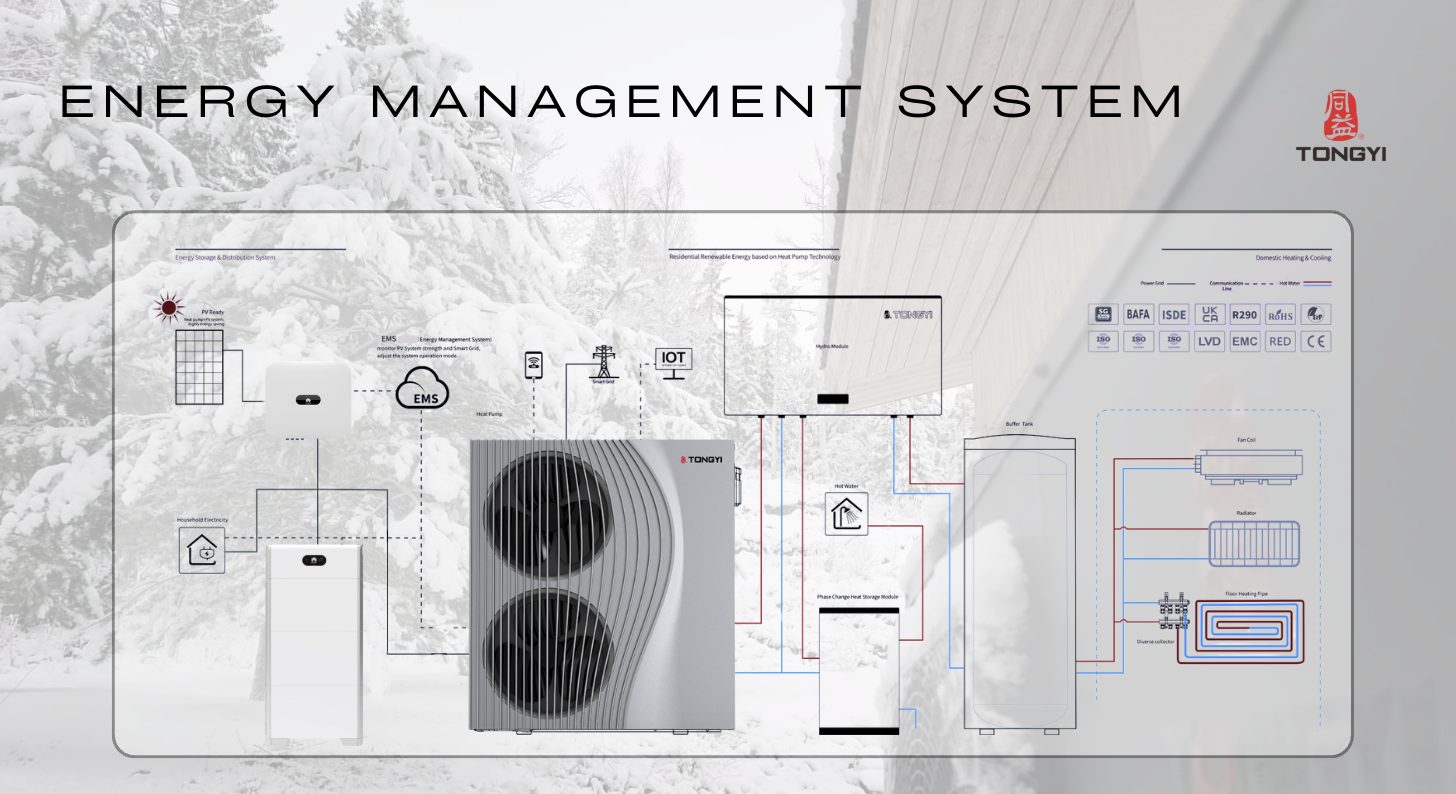
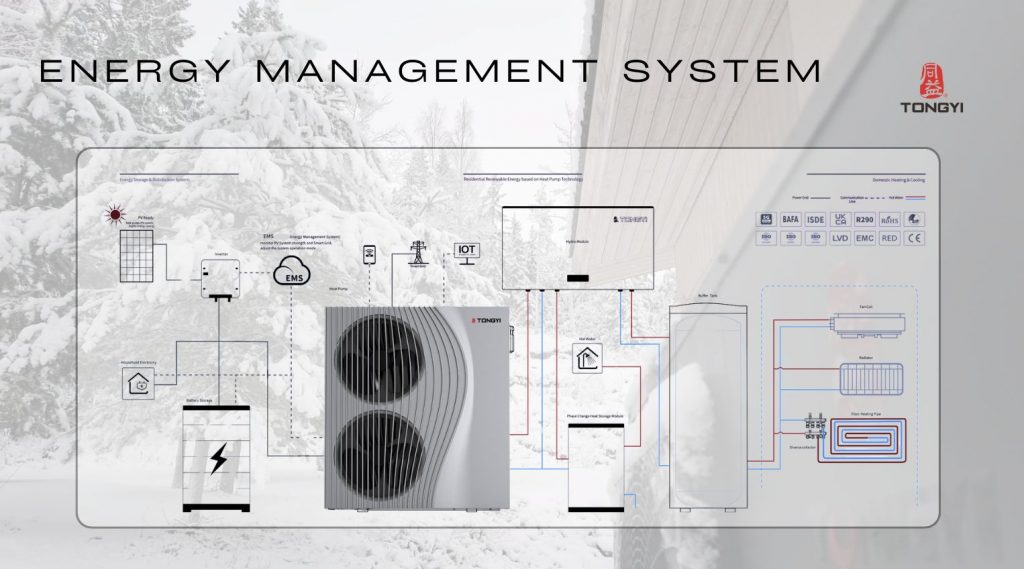
Integrated System Stack:
- PV System → primary energy source
- BESS → storage + flexibility buffer
- Heat Pump (R290) → thermal conversion
- HEMS Controller → decision engine
- Grid Interface (14a-ready) → compliance + incentives
Operational Logic Under 14a
Without BESS:
- Grid limits → heat pump throttled
- Comfort risk increases
With BESS:
- Battery discharges → heat pump continues
- Grid constraint absorbed → no comfort loss
Strategic Implications for the Market
The introduction of §14a EnWG is not just regulatory—it is structural:
- Heat pumps are no longer standalone appliances
- They become flexible grid assets
- Integration with BESS is likely to move from optional to increasingly common in advanced systems.
Tongyi Perspective: Engineering for Energy Control
Tongyi’s approach aligns directly with this transition:
- R290 platform → high efficiency + low environmental impact
- HEMS-ready architecture → integration with PV, BESS, and grid signals
- Future-ready control logic → compatibility with demand response frameworks
👉 The shift is clear:
Energy decisions happen before comfort is delivered