

R290 is becoming increasingly important in European heat pump technology.
It offers excellent thermodynamic properties and an extremely low Global Warming Potential. Under the current EU F-gas framework, R290 has a GWP100 of just 0.02.
However, R290 is also propane.
That naturally raises an important question:
Are R290 heat pumps safe?
The short answer is yes, when the equipment is correctly designed, installed and handled according to the applicable safety requirements and manufacturer instructions.
However, R290 is classified as an A3 refrigerant because of its flammability. Therefore, safety must be considered throughout the design, installation, servicing and end-of-life stages of the heat pump.
Why Is R290 Classified as an A3 Refrigerant?
Refrigerants are classified according to characteristics such as toxicity and flammability.
R290 belongs to the A3 safety class.
The letter A indicates lower toxicity, while the number 3 represents higher flammability.
Therefore, R290 requires different safety considerations from non-flammable or mildly flammable refrigerants.
This does not mean that an R290 heat pump is inherently unsafe.
Instead, it means manufacturers and installers must design and work with the system according to the requirements associated with a flammable refrigerant.
Why Use R290 If It Is Flammable?
The answer lies in the combination of environmental and technical performance.
R290 is a natural, non-fluorinated refrigerant. Its current GWP100 under the European F-gas framework is only 0.02.
It also has thermodynamic characteristics that make it well suited to air-to-water heat pumps.
For example, properly designed R290 systems can provide high water temperatures while maintaining efficient heat-pump operation.
As Europe moves toward refrigerants with lower climate impact, R290 has therefore become an important option for residential heating.
Its advantages, however, must always be combined with appropriate safety engineering.
How Does an R290 Monoblock Heat Pump Manage Refrigerant Safety?
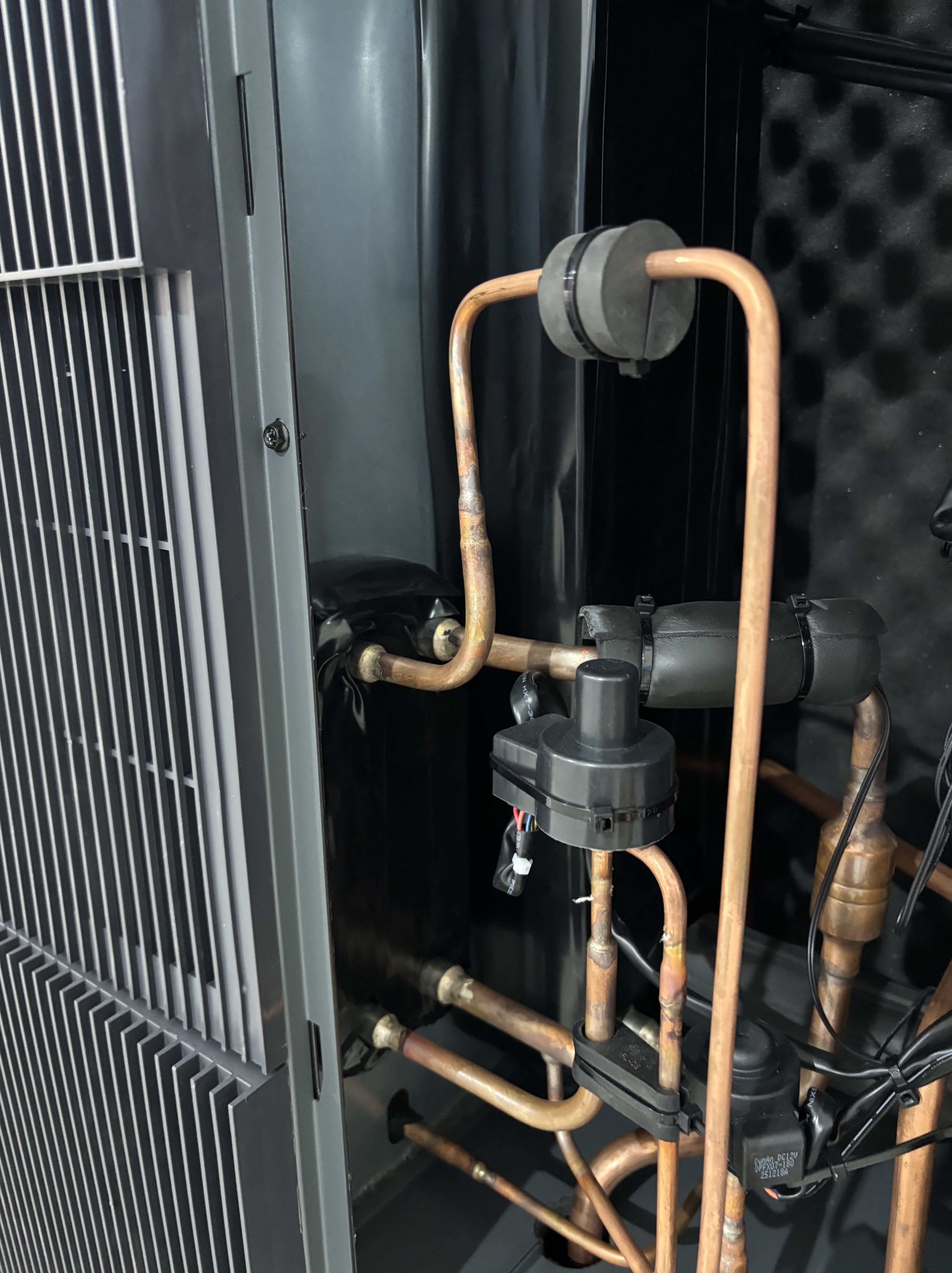
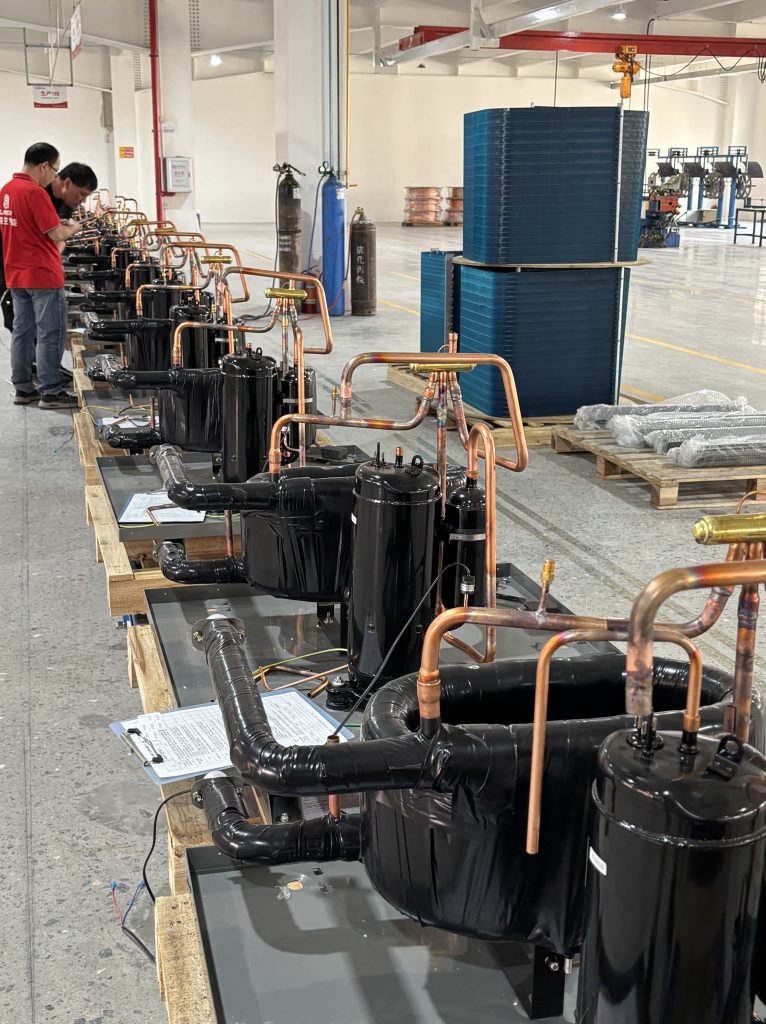
One important feature of many residential R290 systems is the monoblock design.
In a monoblock heat pump, the refrigeration circuit is contained within the outdoor unit.
The refrigerant therefore circulates inside a factory-assembled refrigeration circuit rather than through refrigerant pipes running between separate indoor and outdoor refrigeration units.
For the installer, the main connections to the building are normally hydraulic and electrical.
This architecture can simplify installation and limits the need for refrigerant-circuit work during a standard installation.
However, installers must still follow the manufacturer’s installation instructions and applicable national and European safety requirements.
Why Does Outdoor Installation Matter?
The location of an R290 heat pump is an important part of system safety.
Residential R290 monoblock heat pumps are commonly designed for outdoor installation.
Correct positioning helps ensure suitable airflow around the unit. It also allows manufacturers to define required clearances and safety areas around the equipment.
Installers should therefore pay attention to factors such as:
- manufacturer-specified safety distances;
- nearby doors and windows;
- air inlets and ventilation openings;
- drains, pits or other low-level spaces;
- possible ignition sources;
- accessibility for servicing;
- and local installation requirements.
The exact requirements depend on the product, installation environment and applicable rules.
For this reason, safety distances should never be guessed or copied from another heat pump.
The installation manual for the specific model must always be followed.
What Happens If R290 Leaks?
Propane is heavier than air.
If a significant leak occurs, refrigerant can therefore accumulate in low or poorly ventilated areas under certain conditions.
This is one reason why installation location and clearance requirements are important.
Manufacturers must also consider refrigerant charge, circuit design, leak prevention and other safety measures during product development.
A correctly engineered heat pump therefore treats refrigerant safety as part of the complete system design rather than as an additional feature.
Does R290 Require Special Installer Knowledge?
The transition toward natural refrigerants also creates new training requirements for the European heating industry.
The European Heat Pump Association is participating in SKILLSAFE EU, an EU-funded initiative focused specifically on the safe handling of residential R290 monoblock heat pumps.
The project covers the complete lifecycle of these systems, including design, storage, transport, installation, inspection, maintenance, servicing and disposal.
It is also developing training and guidance for installers.
This highlights an important point: the growth of R290 technology needs to be accompanied by appropriate technical skills.
A high-quality heat pump and a competent installation must work together.
Are R290 Heat Pumps Safe for Homes?
R290 can be used safely in residential heat pumps when the system has been designed for the refrigerant and installed according to the applicable requirements.
The relevant question is therefore not simply:
“Is propane flammable?”
It is.
A more useful question is:
“How is the system engineered and installed to manage that risk safely?“
For homeowners, distributors and installers, several factors matter:
- compliant product design;
- controlled refrigerant charge;
- appropriate installation location;
- correct safety clearances;
- trained installation and service personnel;
- and compliance with manufacturer instructions and applicable standards.
These principles allow the environmental and technical advantages of R290 to be used while managing its flammability appropriately.
R290 Safety Is an Engineering Question
The move toward R290 represents more than a change of refrigerant.
It requires manufacturers to consider safety from the beginning of product development.
Tongyi’s R290 air-to-water heat pumps use a monoblock architecture with the refrigerant circuit contained within the outdoor unit.
The RH Series combines R290 technology with inverter operation, intelligent control and high-temperature water production for European residential heating applications.
For Tongyi, the objective is not simply to use a refrigerant with a very low GWP.
It is to integrate R290 into a complete heat pump platform designed around performance, control, reliability and safety.
The Future of R290 Heat Pump Safety
The European heat pump sector is gaining practical experience with R290.
At the same time, industry organizations are developing more harmonized guidance and installer training.
The EU-funded SKILLSAFE EU project is a good example. Its work specifically addresses the safe deployment of self-contained residential air-to-water heat pumps using highly flammable refrigerants such as R290.
This development is important.
Low-GWP refrigerants can help reduce the direct climate impact of heating technology. However, the transition must also maintain high standards of product engineering, installation and professional competence.
R290 combines extremely low climate impact with useful properties for modern air-to-water heat pumps. Its A3 classification requires respect, but with appropriate engineering and installation practices, it can be safely applied in residential heat pump systems.
#FridayTech | Tongyi Heat Pump