

Updated: June 5, 2026
If you’re considering upgrading to a heat pump for your home, an air-to-water heat pump is one of the most economical and efficient options. This type of system extracts heat from the outdoor air to provide warmth and hot water, making it an eco-friendly choice for homeowners. However, it’s important to understand the installation costs before making your decision.
Air-to-Water Heat Pump Installation Cost: What Influences the Final Price?
Understanding the real air-to-water heat pump installation cost is important before planning a residential or light commercial heating project. While the heat pump unit itself is a central part of the investment, the final installation price depends on several technical and site-specific factors: system size, property type, existing heating distribution, domestic hot water needs, electrical work, labour, and whether the system is a monobloc or split-type installation.
In Europe, a typical air-to-water heat pump installation can vary significantly. For a standard residential project, costs may commonly range from approximately €8,000 to €14,000, while larger or more complex homes can reach €12,000 to €18,000 or more. These figures should be seen as general reference ranges, not fixed prices. A correct quotation always requires proper sizing and an assessment of the building.
| Project type | Typical installation cost |
|---|---|
| Standard residential installation | Approx. €8,000–€14,000 |
| Larger or more complex property | Approx. €12,000–€18,000+ |
Final costs depend on heat pump capacity, property type, existing radiators or underfloor heating, domestic hot water requirements, electrical work, labour, and local installation conditions.
1. Equipment Cost vs Installation Labour
The total cost is usually divided between the heat pump equipment and the installation work. The equipment cost includes the outdoor unit, controller, hydraulic accessories, sensors, and sometimes additional system components depending on the configuration. Installation labour includes positioning the unit, connecting the hydraulic circuit, adapting pipework, commissioning the system, and checking that the installation works safely and efficiently.
A lower-cost unit does not always mean a lower-cost project. If the system is not properly selected or if installation requirements are underestimated, additional work may be needed later. For this reason, the best approach is to evaluate the total project cost, not only the purchase price of the heat pump.
2. Monobloc vs Split Heat Pump Installation Cost
The type of heat pump also affects the installation cost. A monobloc air-to-water heat pump normally contains the refrigerant circuit inside the outdoor unit. This can simplify installation because the installer usually works mainly with water-side connections rather than refrigerant pipework. In many residential projects, this can reduce complexity and make installation more straightforward.
A split heat pump system, on the other hand, separates the outdoor and indoor components and may require refrigerant-side work. This can increase installation complexity and may require a certified refrigeration technician, depending on the country and local regulations. Split systems can be suitable in specific cases, but they often involve more technical installation steps.
For many European residential and small commercial projects, monobloc heat pumps are attractive because they simplify the installation process and reduce the number of specialist operations required on site.
3. Existing Heating System: Radiators or Underfloor Heating
The existing heating distribution system has a major impact on the final cost. Homes with underfloor heating are usually well suited to air-to-water heat pumps because they operate efficiently at lower water temperatures. This can improve performance and reduce operating costs.
Homes with older radiators may require a more careful assessment. In some cases, the existing radiators are large enough to work efficiently with a heat pump. In other cases, radiators may need to be replaced or upgraded to operate with lower flow temperatures. This can increase the installation cost but may be necessary to achieve good seasonal efficiency.
The installer should check whether the heat pump can provide enough comfort at the required water temperature. For renovation projects, this step is essential. A heat pump that is correctly sized but connected to unsuitable heat emitters may not deliver the expected comfort or efficiency.
4. Domestic Hot Water, Buffer Tanks and System Components
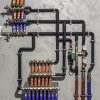
Another important cost factor is domestic hot water production. If the heat pump is also used for DHW, the system may require a compatible hot water cylinder. In some installations, a buffer tank may also be recommended to improve system stability, support defrost cycles, or manage hydraulic separation.
Additional components may include:
- domestic hot water cylinder
- buffer tank
- expansion vessel
- circulation pump
- safety valve
- filters and magnetic dirt separator
- three-way valve
- sensors and control wiring
These components can increase the initial project cost, but they are often necessary for reliable operation. A well-designed hydraulic system protects the heat pump, improves comfort, and helps avoid future service issues.
5. Electrical Work and Control Integration
Air-to-water heat pumps also require proper electrical preparation. Depending on the model and capacity, the installation may need dedicated wiring, protection devices, or upgrades to the electrical panel. Larger units or three-phase systems can require additional checks before installation.
Modern heat pump systems may also include smart control features, remote monitoring, or integration with photovoltaic systems, energy storage, or smart grid functions. These features can add value to the installation but may also require additional setup during commissioning.
Tongyi heat pumps are designed with practical control functions that support installers and end users, including smart operation, remote access, and system monitoring options depending on the product configuration.
6. Removing the Old Heating System
If the project involves replacing a gas boiler, oil boiler, or older heating appliance, removal and disposal may also affect the final cost. The installer may need to disconnect the existing unit, remove tanks or pipework, and adapt the technical room for the new system.
In some renovation projects, the old system can remain temporarily as a backup. In others, the heat pump fully replaces the previous heating source. The selected strategy depends on the building, climate, available budget, and local energy policy.
7. Permits, Incentives and Country Differences
Installation costs also vary by country. Labour costs, subsidy schemes, technical rules, and market maturity differ across Europe. For example, installation conditions in Germany, the Netherlands, Poland, France, Italy, or the Nordic countries may not be identical.
In some markets, incentives can reduce the final cost for the homeowner or project owner. These schemes may depend on the heat pump type, refrigerant, energy class, installer certification, or national eligibility lists. Because subsidy rules change over time, homeowners and distributors should always verify the latest local requirements before confirming a project.
8. Why Proper Sizing Matters
Correct sizing is one of the most important steps in controlling the total air-to-water heat pump installation cost. An undersized unit may struggle during cold weather, while an oversized unit may cycle too frequently, reducing efficiency and comfort.
Sizing should consider:
- building size and insulation level
- local winter design temperature
- heating demand
- domestic hot water demand
- radiator or underfloor heating system
- preferred flow temperature
- available electrical supply
- future PV or energy-management integration
A professional quotation should therefore be based on the real heating requirements of the building, not only on square metres.
Conclusion: Focus on Total Project Value
The final air-to-water heat pump installation cost depends on much more than the unit price. A complete project includes equipment, labour, hydraulic components, electrical work, commissioning, and sometimes upgrades to radiators, tanks or controls.
For homeowners, installers and distributors, the most important step is to evaluate the full system. A well-designed installation can improve comfort, reduce energy use, and support long-term reliability. Tongyi provides air-to-water heat pump solutions for different residential and commercial applications, helping partners select suitable systems according to project size, climate conditions and hot water requirements.
Before choosing a system, always request a technical assessment and a project-based quotation. This ensures that the selected heat pump is correctly sized, properly installed, and adapted to the real conditions of the building.