

Europe has entered a new phase of its energy transition. On 17 July 2026, the European Commission published its Electrification Action Plan, establishing a clearer pathway for replacing fossil-fuel technologies with efficient electric solutions. EU Electrification Action Plan heat pumps are expected to play a central role in this transition.
Heat pumps are among the technologies placed at the centre of this strategy. Their ability to provide efficient heating, cooling and domestic hot water makes them highly relevant to the electrification of homes, commercial buildings and industrial processes.
But what does electrification actually mean, and why are heat pumps so important to it?
What is energy electrification?
Energy electrification means replacing technologies that directly burn fossil fuels with solutions powered by electricity. Examples include replacing combustion-engine vehicles with electric vehicles and replacing gas or oil boilers with heat pumps. However, electrification is not simply about consuming more electricity.
It is about using electricity more efficiently and coordinating demand with renewable generation, energy storage and the capacity of the electricity grid. In 2024, renewable energy accounted for 47.5% of the electricity consumed in the European Union. Nevertheless, electricity represented only around 23% of final EU energy consumption.
The European Electrification Action Plan establishes a reference level of 32% by 2030 and an indicative target of 46% by 2040. The role of EU Electrification Action Plan heat pumps will therefore be central to achieving these objectives.
This transformation will require technologies that can convert electricity into useful energy as efficiently as possible, which is why EU Electrification Action Plan heat pumps have a decisive advantage.
Why are heat pumps different from conventional electric heating?
A conventional electric heater converts electricity directly into heat. A heat pump operates differently: it uses electricity to transfer thermal energy from the surrounding air, ground or water into a building.
This means that a heat pump can deliver several units of thermal energy for every unit of electricity consumed, depending on the operating conditions and system design.
This high efficiency is why heat pumps can reduce both energy consumption and operating costs when they are correctly selected, installed and controlled.
According to the European Commission, switching from a gas boiler to a heat pump could reduce the average EU household’s heating bill by up to 60%, although actual savings depend on local energy prices, building characteristics, climate conditions and system performance.
One system for heating and cooling
Electrification is also closely connected to climate adaptation. As European summers become warmer, buildings increasingly need efficient cooling as well as winter heating.
A reversible air-to-water heat pump can use the same system to provide space heating during winter and chilled water for cooling during summer. It can also produce domestic hot water throughout the year.
This multifunctional capability can reduce the need to install separate systems for heating, cooling and hot water production.
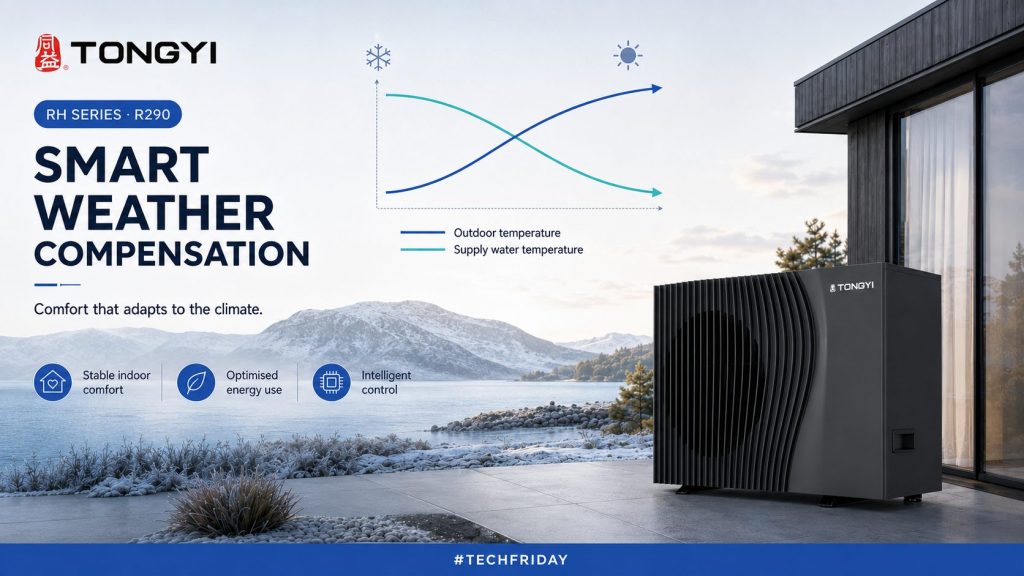
Modern R290 air-to-water heat pumps are particularly relevant to this transition. R290 is a natural refrigerant with a very low global warming potential, helping manufacturers and building owners prepare for increasingly strict refrigerant requirements.
Heat pumps as flexible energy assets
The next generation of heat pumps will do more than respond to a thermostat. Connected controls allow heat pumps to interact with smart meters, photovoltaic systems, energy storage and building energy management platforms.
Through smart energy management, a heat pump can increase or reduce its electricity consumption according to factors such as:
- Electricity prices
- Available solar generation
- Grid demand
- Indoor temperature
- Stored hot water
- Building thermal capacity
For example, a system may heat a water tank when solar electricity is abundant and reduce its electricity consumption during an expensive peak period. The stored thermal energy can then be used later without significantly affecting indoor comfort.
This ability to shift energy consumption is known as demand-side flexibility. It can help households reduce costs while supporting a more balanced electricity grid.
The EU plan specifically recognises the importance of integrating heat pumps, thermal storage and demand response into the electricity system.
Combining heat pumps with solar PV
Connecting a heat pump to PV panels can increase the amount of locally generated electricity used inside a building.
Instead of exporting all surplus solar production to the grid, some of this electricity can be converted into useful heating, cooling or domestic hot water. A water tank or the thermal mass of the building can effectively act as a form of thermal energy storage.
The results depend on system sizing, the building’s energy demand, control settings and the availability of solar energy. Nevertheless, intelligent coordination between PV generation and heat-pump operation can improve self-consumption and reduce dependence on purchased electricity.
What does the EU plan mean for the heat-pump market?
The European Commission estimates that approximately 30 million heat pumps are currently installed across the EU. Its Electrification Action Plan describes a pathway that could increase this figure to around 100 million.
The plan also addresses some of the barriers currently limiting heat-pump adoption, including:
- The price difference between electricity and gas
- High initial investment costs
- Limited electricity-grid capacity
- Shortages of qualified installers
- The need for improved demand-response integration
- Insufficient incentives for replacing fossil-fuel equipment
Stable policies, appropriate electricity pricing and installer training will be essential. Technology alone cannot deliver the transition, but efficient and connected heat pumps provide one of its most practical foundations.
Tongyi heat pumps and intelligent electrification
Tongyi develops air-to-water heat-pump solutions for residential, commercial and industrial applications.
The Tongyi R290 RH Series combines heating, cooling and domestic hot water production with inverter control and smart connectivity. Depending on the overall system design, a Tongyi heat pump can be integrated with photovoltaic generation, water tanks and energy management solutions.
These capabilities support a transition from isolated heating appliances towards connected building-energy systems that use electricity more efficiently.
Conclusion
Europe’s Electrification Action Plan confirms that heat pumps are not simply an alternative to traditional boilers. They are becoming an important link between buildings, renewable electricity and smarter energy grids.
By combining high energy efficiency, heating, cooling, thermal storage and intelligent control, heat pumps can help buildings reduce fossil-fuel consumption while adapting to a changing climate.
The future of heating is not only electric. It is efficient, connected and flexible.