
A heat pump can be correctly sized and commissioned yet still be affected by poor-quality water in the heating circuit. Corrosion products, installation debris, scale and unsuitable chemical treatment can restrict waterways, load pumps and filters, and interfere with heat transfer.
This is especially relevant when a new air-to-water heat pump is connected to existing radiators or pipework. The new appliance may be efficient and clean, but the older circuit can contain material accumulated over many years. Good heat pump water treatment therefore starts before commissioning and continues through routine maintenance.
The practical principle is simple: assess the system, clean it where necessary, provide appropriate filtration, use compatible treatment products and verify the water condition. The exact process must follow the heat-pump manufacturer’s instructions, the chemical supplier’s guidance and the applicable local standard.
What does heat pump water treatment include?
Heat pump water treatment is the controlled preparation and maintenance of the water circulating through the building’s hydronic heating or cooling circuit. It normally covers:
- inspecting the existing system and assessing contamination risk;
- cleaning and flushing pipework, radiators and other emitters;
- removing installation debris and corrosion products;
- installing suitable in-line filtration or dirt separation;
- adding a compatible corrosion inhibitor at the correct concentration;
- checking glycol or other frost-protection fluid where it is specified;
- recording and testing water condition during commissioning and maintenance.
It is not a single chemical or accessory. It is a system-level process that considers the heat pump, pipework, emitters, pumps, valves, buffer or volumiser, and any external hydraulic circuit together.
Why existing systems need particular attention
Retrofitting a heat pump does not automatically mean every radiator must be replaced. Radiator output should be checked room by room, as explained in our guide to heat pump radiator sizing. Water quality is a separate question.
Older steel radiators and ferrous components can produce corrosion particles. Previous repairs may have introduced sealants or incompatible chemicals. Open-vented sections, frequent top-ups, mixed metals, oxygen ingress and long periods of poor maintenance can also affect system condition.
Connecting a new heat pump without assessing that legacy circuit risks carrying existing debris into narrow waterways, control valves, pumps or the water-side heat exchanger. A competent installer should therefore inspect the system, determine an appropriate cleaning method and confirm that the water meets the appliance manufacturer’s requirements before final commissioning.
What can be found in heating-system water?
Different contaminants require different controls:
| Contaminant or condition | Typical origin | Why it matters |
|---|---|---|
| Magnetite and other iron oxides | Corrosion of ferrous radiators, pipework or components | Can collect in filters, pumps, valves and restricted waterways |
| Non-magnetic debris | Jointing material, solder residue, dirt, scale fragments or installation waste | A magnetic filter alone may not capture it |
| Scale | Hard-water make-up, incorrect filling practice or repeated top-ups | Can reduce the effective waterway or form deposits on heat-transfer surfaces |
| Unsuitable or depleted treatment chemicals | Incorrect product, under-dosing, over-dosing or mixing products | May leave the system insufficiently protected or create compatibility problems |
| Microbiological growth | Possible in some lower-temperature heating and cooling circuits | Requires assessment and a treatment approach suited to the system |
The visible colour of a water sample is not a complete diagnosis. Testing may need to consider inhibitor concentration, pH, cleanliness, glycol concentration and other parameters specified by the appliance or treatment manufacturer.
Clean and flush before commissioning
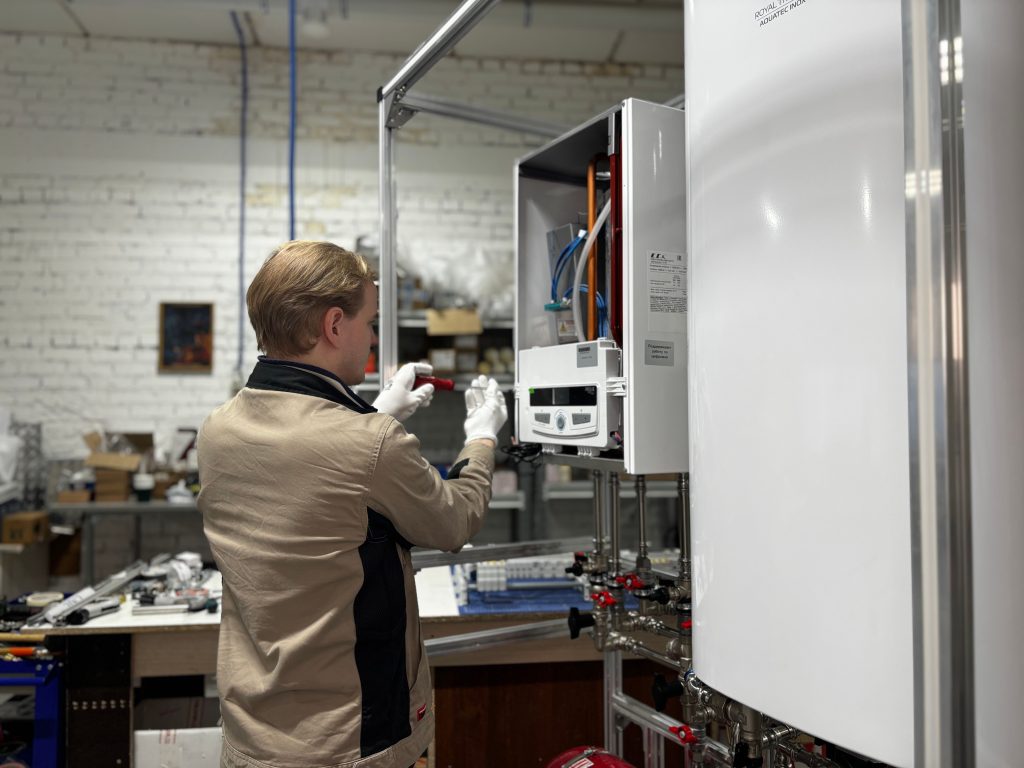
New pipework can contain flux residue, swarf and other installation debris. Existing systems can contain corrosion products and historical chemical residues. Both situations may justify cleaning and flushing before the heat pump is commissioned.
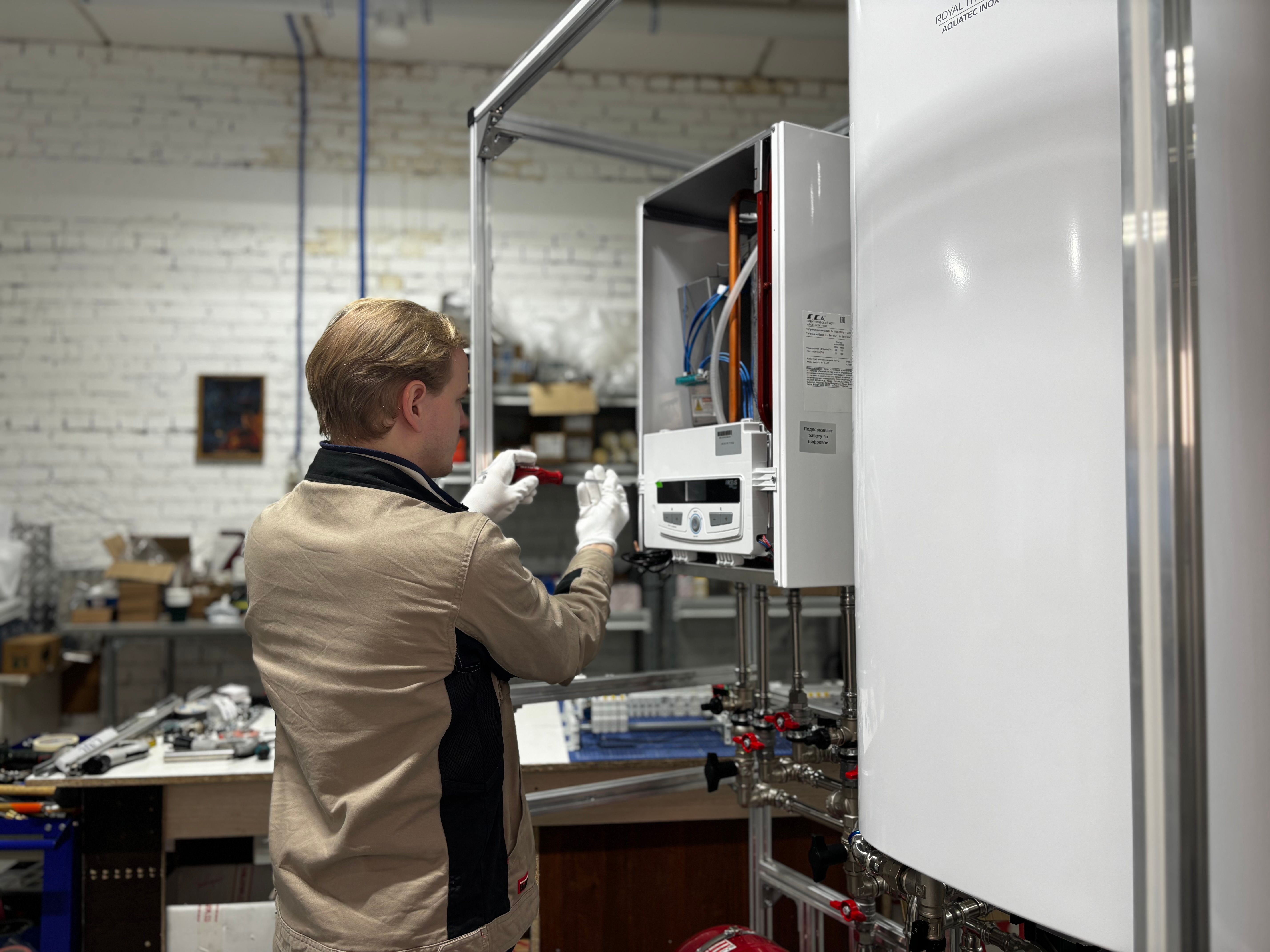
There is no universal flushing method for every installation. The correct process depends on the system’s age, layout, materials, contamination level and component restrictions. It may involve targeted cleaning, circulation of an approved cleaner, section-by-section flushing or a more intensive process on heavily contaminated systems.
Cleaning chemicals must be compatible with all system materials and must be removed or neutralised as their instructions require. Simply draining and refilling once may not remove settled debris from radiators or low points. Conversely, an unnecessarily aggressive procedure can create its own risks. This work should be planned by a qualified heating professional, not improvised from a generic chemical dose.
Magnetic filters, in-line filters and strainers are not identical
The terms used for filtration are sometimes treated as interchangeable, but the components do different jobs.
Magnetic filter
A magnetic filter is designed to collect ferrous particles, including magnetite. It can be highly useful on systems with steel radiators or other ferrous components. It needs to be accessible and maintained; a filter that is never inspected cannot provide evidence about what it has captured.
In-line filter or dirt separator
A suitable in-line filter or dirt separator can be selected to capture both magnetic and non-magnetic debris. The selection should consider particle capture, pipe size, design flow, allowable pressure drop and ease of servicing.
Y-strainer
A Y-strainer is generally intended to stop larger debris. It may protect a component, but it should not automatically be assumed to provide the same function as a purpose-designed magnetic and non-magnetic in-line filter.
Filter type and location must follow the heat-pump manufacturer’s hydraulic requirements. The device should be correctly sized for the design flow and installed where it can be isolated, opened and cleaned safely. An undersized or blocked filter can itself become a restriction.
Use a compatible inhibitor at the correct concentration
After cleaning and final flushing, a suitable corrosion inhibitor can help protect the closed water circuit. Product choice should be based on the metals, seals, plastics and other materials present in the complete system.
Correct concentration matters. Too little may not provide the intended protection; adding more than the specified dose is not a substitute for testing or maintenance. If different chemicals have previously been used, compatibility should be checked rather than assumed.
The installer should record the product, dose or measured concentration, fill date and test result in the commissioning documentation. This creates a useful baseline for later service visits.
Glycol is not the same as corrosion inhibitor
Some monobloc installations use a water-glycol mixture or another approved frost-protection strategy for external water pipework. Glycol and corrosion inhibitor perform different functions, even when supplied as part of a combined formulation.
The required frost-protection approach depends on climate, pipe routing, control strategy, backup arrangements and manufacturer instructions. Glycol concentration must not be guessed: it affects freeze protection, viscosity, pumping requirements and heat-transfer characteristics. Any inhibitor or cleaner used alongside it must be compatible.
Where external water pipes are present, correct fluid selection should be combined with weather-resistant heat pump pipe insulation. Chemical protection does not replace insulation, and insulation does not replace an appropriate freeze-protection design.
Water quality and water flow are connected—but not the same topic
Water flow describes how much fluid circulates through the system under operating conditions. Water treatment describes the condition of that fluid and the measures used to keep the circuit clean and protected.
The two interact. Debris can obstruct strainers, filters, valves or heat exchangers and contribute to a loss of circulation. Excessive pressure drop across an incorrectly selected or blocked filter can also affect pump duty. However, cleaning the water does not correct poor pipe sizing, a closed valve, trapped air or an incorrectly set circulation pump.
For the hydraulic side of the subject, see why water flow matters in air-to-water heat pumps.
Does an R290 heat pump need different water treatment?
R290 is the refrigerant in the sealed refrigeration circuit. The water treatment discussed here concerns the separate hydronic circuit that distributes heat around the building. R290 therefore does not, by itself, require a special inhibitor or a different flushing process.
The normal design priorities still apply: clean water, compatible materials, suitable filtration, correct flow and manufacturer-approved commissioning procedures. This is just as important for an R290 monobloc because its water-side components remain part of the complete heating system.
Tongyi’s R290 inverter air-to-water heat pump is designed as part of a wider hydronic installation. Product selection should therefore be accompanied by heat-loss calculation, emitter assessment, hydraulic design, water-quality preparation and qualified commissioning.
A practical commissioning checklist
Before handover, the installer should be able to confirm the following, subject to the manufacturer’s instructions and local rules:
- The existing circuit has been inspected and its contamination risk assessed.
- New and existing pipework has been cleaned and flushed using a suitable method.
- The final fill water meets the applicable quality requirements.
- An appropriate magnetic and/or non-magnetic in-line filter has been selected and installed where required.
- Strainers, filters and dirt separators are accessible for maintenance.
- The corrosion inhibitor is compatible and its concentration has been verified.
- Any glycol concentration has been measured rather than estimated.
- The system has been vented, pressurised and checked for leaks.
- Design flow has been verified after filters and valves are in their operating positions.
- Water-treatment products, readings and service instructions have been recorded for the owner.
Ongoing maintenance
Water treatment is not finished at handover. During scheduled service visits, the engineer should follow the heat-pump and treatment-product instructions. Appropriate checks may include:
- inspecting and cleaning serviceable filters or dirt separators;
- testing inhibitor concentration and relevant water-quality parameters;
- checking glycol condition and freeze-protection level where used;
- investigating repeated pressure loss or frequent top-ups;
- checking for signs of air ingress, corrosion, leaks or restricted flow;
- recording results and any corrective action.
Repeatedly topping up a system without finding the cause can introduce fresh oxygen and minerals. A falling pressure reading should therefore be investigated rather than treated only by adding water.
Common water-treatment mistakes
Fitting a filter but not cleaning the system
A filter can capture circulating debris, but it does not guarantee that settled contamination has been removed from radiators and pipework.
Assuming a magnetic filter catches everything
Magnetic capture is valuable for ferrous particles, but non-magnetic debris needs suitable mechanical separation or filtration.
Choosing a filter without checking pressure drop
Every component affects the hydraulic circuit. Filter size and flow characteristics must suit the system design.
Mixing treatment products without checking compatibility
Cleaners, inhibitors, glycol and sealants should not be combined on assumption. Follow documented compatibility guidance.
Dosing chemicals without testing
A nominal volume estimate is not the same as a verified concentration. Record the treatment and test it using the approved method.
Ignoring the system after commissioning
Filters load over time and treatment condition can change. Planned checks are part of maintaining the complete installation.
Frequently asked questions
Does every heat pump need a magnetic filter?
Not every installation has the same materials or contamination risk. Many systems with ferrous components can benefit from magnetic capture, but the required filtration arrangement should follow the appliance manufacturer’s instructions and the system design. Non-magnetic debris must also be considered.
Can a heat pump be connected directly to old radiators?
Existing radiators may be reusable if their output is sufficient, but the system should also be assessed for contamination, hydraulic suitability and water quality. Emitter sizing and water treatment are related installation checks, not substitutes for one another.
Can I flush a heat-pump system myself?
System cleaning involves chemical compatibility, component protection, disposal requirements, correct filling and commissioning checks. It should be specified and completed by a competent professional familiar with the heat pump and the local requirements.
How often should heat-pump water quality be checked?
Follow the heat-pump and treatment-product instructions and the applicable local standard. A routine service is a logical time to inspect filters and verify relevant water-quality parameters, with additional checks after leaks, component replacement, repeated top-ups or other system interventions.
Does inhibitor improve heat-pump efficiency?
Inhibitor is used to control corrosion; it is not an efficiency additive. Keeping the circuit clean and hydraulically sound helps the installed system operate as designed, but no universal energy-saving percentage should be assumed.
Protect the complete heating system
Reliable heat-pump operation depends on more than the outdoor unit. Pipework, radiators, valves, pumps, filters and circulating water all influence the result.
For a retrofit or new project, specify water treatment as part of the installation—not as an afterthought. Assess the circuit, clean it appropriately, select filtration for the actual flow conditions, use compatible chemicals and preserve a clear commissioning record.
To discuss an air-to-water system built around lower-GWP R290 refrigerant, explore Tongyi’s R290 inverter air-to-water heat pump and request project-specific technical guidance.